Plan for a professional roof inspection at least once a year in Washington, and schedule another after a major storm or if you notice damage. If you’re asking how often a roof should be inspected in Washington, an annual inspection is a practical baseline for catching wear early. Spring or fall is a convenient time to arrange one.
It’s easy to assume a roof is fine when the shingles look intact from the ground. But rain, wind, moss, and damp Northwest conditions can affect flashing, drainage, and other parts you may not be able to see clearly.
This guide covers when to schedule an inspection, which roofs may need closer attention, and what warning signs merit a prompt assessment. Regular inspections help you understand your roof’s condition and plan for replacement when appropriate, without climbing onto the roof yourself.
Key Takeaways
- Learn how roof age, nearby trees, moss history, and weather exposure can change the inspection schedule that makes sense for your home.
- Recognize early moisture warnings, including interior water stains and damp or discolored attic materials.
- See why an annual inspection can reveal wear in flashing, seams, and drainage before you need to plan a roof replacement.
- Understand when roof condition findings can help you prepare for a future installation or replacement.
Common roof damage and maintenance issues
Washington’s wet weather can expose weak points in roofing materials, particularly where flashing meets chimneys, skylights, vents, and roof transitions. Missing shingles, damaged flashing, and debris can allow heavy rain to reach the roof deck. Moss can hold moisture against shingles, lift them, and create paths for water intrusion.
Watch for warning signs from the ground and inside your home. After a windstorm, heavy snowfall, a falling branch, or an extended freeze-thaw period, look over the roof visually once conditions are safe. Don’t climb onto a wet or steep roof. Indoors, water stains, active drips, damp attic wood, discolored roof sheathing, rusty nails, or mold can indicate moisture problems.
Some signs need prompt attention. Visible storm damage or water entering the home warrants a professional inspection as soon as possible, since ongoing moisture can affect more than the roofing surface. Excessive shingle granules in gutters are another reason to have the roof assessed. The damage’s location and extent, along with the condition of surrounding materials, help clarify the roof’s overall state.
If an inspection identifies damage, its findings can help determine whether to consider roof replacement. The assessment may consider the affected area, the condition of nearby shingles and flashing, and whether wear is limited or widespread. These details give homeowners a clearer basis for planning the roof’s next stage.
Maintenance can reduce common sources of buildup and water exposure. Keep gutters and downspouts clear so water drains away from the roof and foundation, and trim overhanging branches to limit debris and storm impacts. Wood shake roofs typically last 20 to 30 years, but Washington’s damp climate makes consistent maintenance important. Poor attic ventilation can also trap heat and moisture, contributing to condensation, mold, decking damage, and premature shingle wear.
How Often Should I Have a Roof Inspection?
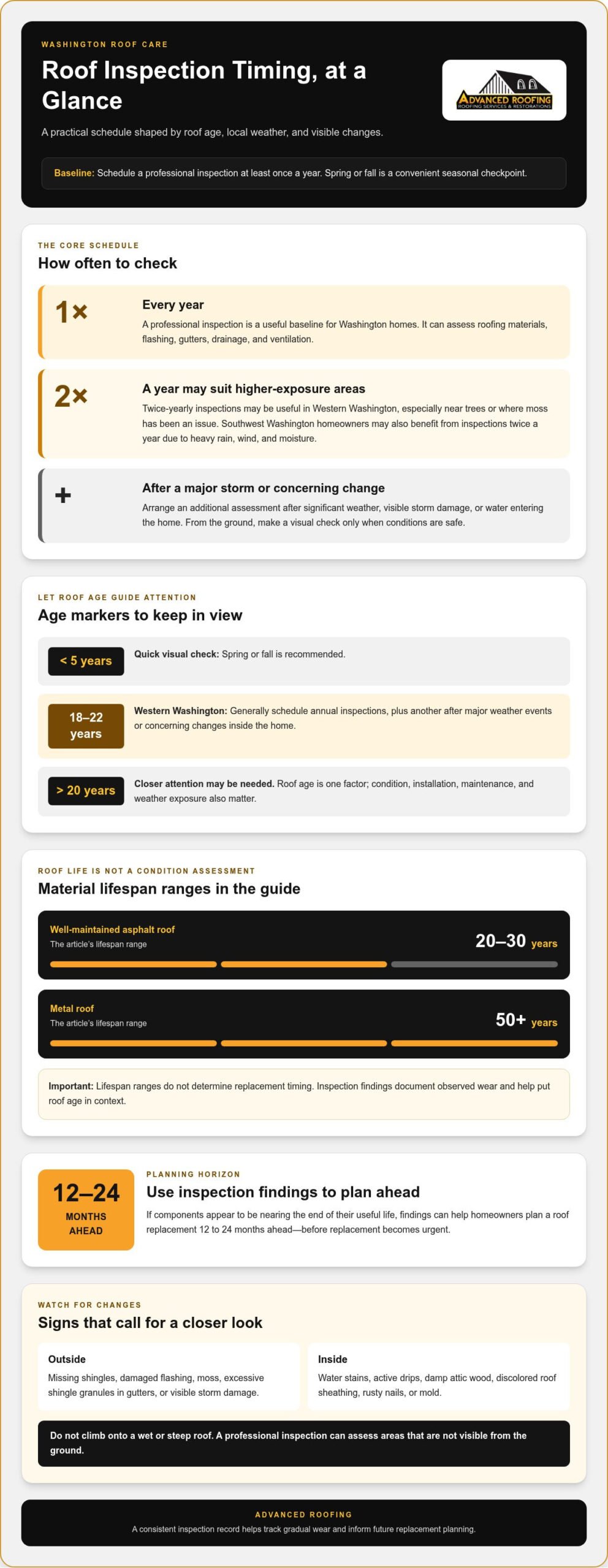
For Washington homes, a professional inspection at least once a year is a useful baseline. Roof age, weather exposure, and visible changes may call for closer attention between annual checks.
Spring and fall provide seasonal checkpoints, while significant storms call for an additional visual check from a safe location. Here’s how to tailor the schedule to your roof and location.
Inspection Frequency in Washington
Annual professional inspections provide a routine chance to assess roofing materials, flashing, gutters, and ventilation. Southwest Washington homeowners may benefit from inspections twice a year because heavy rain, wind, and moisture increase exposure. If you’re wondering how often a roof should be inspected in Washington, use those intervals as a starting point, then factor in roof age and site conditions.
WAC 308-408C-090 sets roof inspection requirements for Washington home inspectors, not a recurring homeowner schedule. Insurance terms vary by policy, so review your policy for any inspection conditions.
Roof Age and Inspection Timing
Roof age helps determine how closely to monitor changing conditions. For roofs less than 5 years old, a quick visual check in spring or fall is recommended. In Western Washington, roofs 18-22 years old should generally receive annual inspections, with another after major weather events or concerning changes inside the home. Roofs over 20 years old may need more frequent attention.
For homeowners asking how often a roof should be inspected in Washington as it ages, regular inspections can help track wear and plan future work.
Western and Southwest Washington Climate Differences
Western Washington’s rain, wind, and moisture can make twice-yearly inspections useful, especially around trees or where moss has been an issue. Southwest Washington homeowners should also consider heavy rain, wind, and damp conditions when setting a routine. In both areas, roof age and nearby trees affect exposure and inspection timing.
After high winds, heavy snow, or another significant storm, check the roof visually from the ground once conditions are safe. Don’t climb onto steep or wet shingles. A professional inspection can assess areas that aren’t visible from the ground.
Annual roof inspections
An annual inspection creates a consistent record of roof condition and can help spot changes before they affect the roof system. In Washington’s damp climate, an inspection can assess drainage, roofing materials, ventilation, and visible structural concerns. Keep inspection dates and findings together; comparing reports can reveal gradual wear that a single visit might not show.
A thorough review looks beyond shingles. It can assess flashing, roof seams, gutters, downspouts, and visible roof penetrations, along with insulation and ventilation. These areas work together: blocked drainage can leave water sitting on the roof, while poor ventilation can trap attic moisture and contribute to decking damage.
Annual findings also help put roof age in context. A well-maintained asphalt roof can last 20 to 30 years, while a metal roof can last 50 or more years. Those ranges aren’t a condition assessment; installation, maintenance, and weather exposure affect how a specific roof performs. The inspection should document observed wear rather than assume age alone determines replacement timing.
Use the report to separate routine monitoring from planning for replacement. If components appear to be nearing the end of their useful life, inspection findings can help homeowners plan replacement 12 to 24 months ahead. That gives time to consider the roof’s condition, materials, and project needs before replacement becomes urgent.
Storm damage calls for an additional assessment, not a reason to skip the annual review. Keep the yearly inspection on the calendar, then arrange another look after an extreme weather event or a concerning change inside the home. Plan your next roof inspection around the roof’s condition and the season’s weather.
Advanced Roofing: Commercial Roofing
Advanced Roofing provides commercial roofing services, including roof inspections, for property owners assessing a building’s needs. Inspection findings can clarify whether a commercial roof needs continued monitoring or whether its condition makes replacement planning the more practical next step.
For homes, Advanced Roofing provides residential roofing, roof installations, and roof replacements. If an inspection finds aging materials or widespread wear, these services can help you plan a replacement suited to the building.
Contact Advanced Roofing to discuss your roofing needs or visit Advanced Roofing online.
Turn Roof Findings Into a Clear Next Step
An inspection can guide more than the date of your next check. Use its findings to decide whether continued monitoring or planning a larger project better suits your building. If you’re still weighing how often a roof should be inspected in Washington, consider the roof’s condition and exposure, along with any changes you notice between inspections. A clear record can help you make deliberate decisions before a small concern disrupts your plans.
When inspection findings point toward a new roofing project, Advanced Roofing provides commercial roofing, residential roofing, and roof installations. The right approach depends on the building and the work needed. Share your inspection findings with Advanced Roofing to discuss the next step.
Take the next step at a pace that works for you. Contact Advanced Roofing to discuss your roofing plans and move forward with greater clarity.
Frequently Asked Questions
How often should different roofing materials be inspected in Washington?
Arrange a professional inspection at least once a year, with an additional inspection after a major storm or signs of damage. Timing should also reflect the roof’s age and exposure. Wood shake roofs need consistent maintenance in Washington’s damp climate.
How do Washington’s western and eastern climates affect roof inspection frequency?
In Western Washington, rain, wind, and moisture can make twice-yearly inspections useful, especially near trees or where moss has been an issue. Arrange an additional inspection after a major storm.