
What if a commercial roof replacement could move forward without bringing your daily operations to a stop? Noise, changing access routes, active work zones, and Northwest weather can all make the project feel disruptive. Avoiding business disruption during reroofing starts with a realistic plan, not a promise that work will go unnoticed.
With phased scheduling, clear communication, and coordinated work areas, you can help protect customer access, employee safety, and essential business activity while the new roof is installed. This guide explains how to plan work around operating hours, keep staff and customers informed, and prepare for weather-related schedule changes. You’ll also learn what to look for in a commercial roofing team that can organize a replacement with care, drawing on the needs of businesses across Greater Portland and Vancouver.
Key Takeaways
- Identify the customer, staff, access, and workflow priorities that a roof replacement plan needs to account for.
- For avoiding business disruption during reroofing, align work sequencing and site access with your business’s day-to-day activity.
- Keep employees and customers informed when work areas or access routes change, and review project progress with the roofing team.
- Advanced Roofing plans commercial replacements and installations across Greater Portland and Vancouver, with TPO, PVC, and EPDM system experience.
Why Commercial Reroofing Can Disrupt Business Operations, and What Planning Can Control
A commercial roof replacement takes place above an active workplace, so the project can affect more than the roof itself. Businesses need to protect customers and staff, maintain safe access, and keep essential workflows moving. Noise from work overhead may interrupt calls or customer conversations, while materials, equipment, and deliveries can temporarily change how people move around the property.
The level and type of disruption depend on the building, the scope of the replacement, occupancy, and site conditions. A busy storefront has different access needs than a warehouse, and roof layout or building conditions can shape which areas are worked on first. Planning can help manage these realities, but it can’t guarantee that operations will continue without interruption.
Which business activities need protection during a roof replacement?
Start by mapping the routines people rely on each day. Mark customer entrances, employee routes, delivery points, parking or loading areas, and operating spaces that are sensitive to noise or interruptions. Note when those areas are busiest and where a temporary change would cause the most difficulty. This gives business leaders and the roofing team a practical basis for coordinating the work.
Roof and building conditions also influence sequencing and site precautions. The team may need to account for where materials arrive, which parts of the building remain in use, and how work areas relate to entrances and deliveries. As seen across commercial property upgrades managed by firms like Swiss Build Ltd, discussing these details before work begins helps establish clear expectations and identify potential conflicts early.
Planned coordination can reduce avoidable conflicts between roofing work and daily operations, without promising zero disruption. That realistic approach is central to avoiding business disruption during reroofing: identify the activities that matter most, communicate where conditions may change, and build the project plan around the actual site.
How to Plan a Commercial Reroofing Project Around Daily Operations
A useful project plan connects the roofing sequence to the way your site functions. Business leaders know when entrances, loading areas, and workspaces are busiest; the roofing team understands the work sequence and space required. Similar to managing comprehensive building and commercial renovations with specialists like Powerpillar Ltd, bringing both perspectives together before the replacement begins helps keep the plan practical as site conditions and business needs evolve.
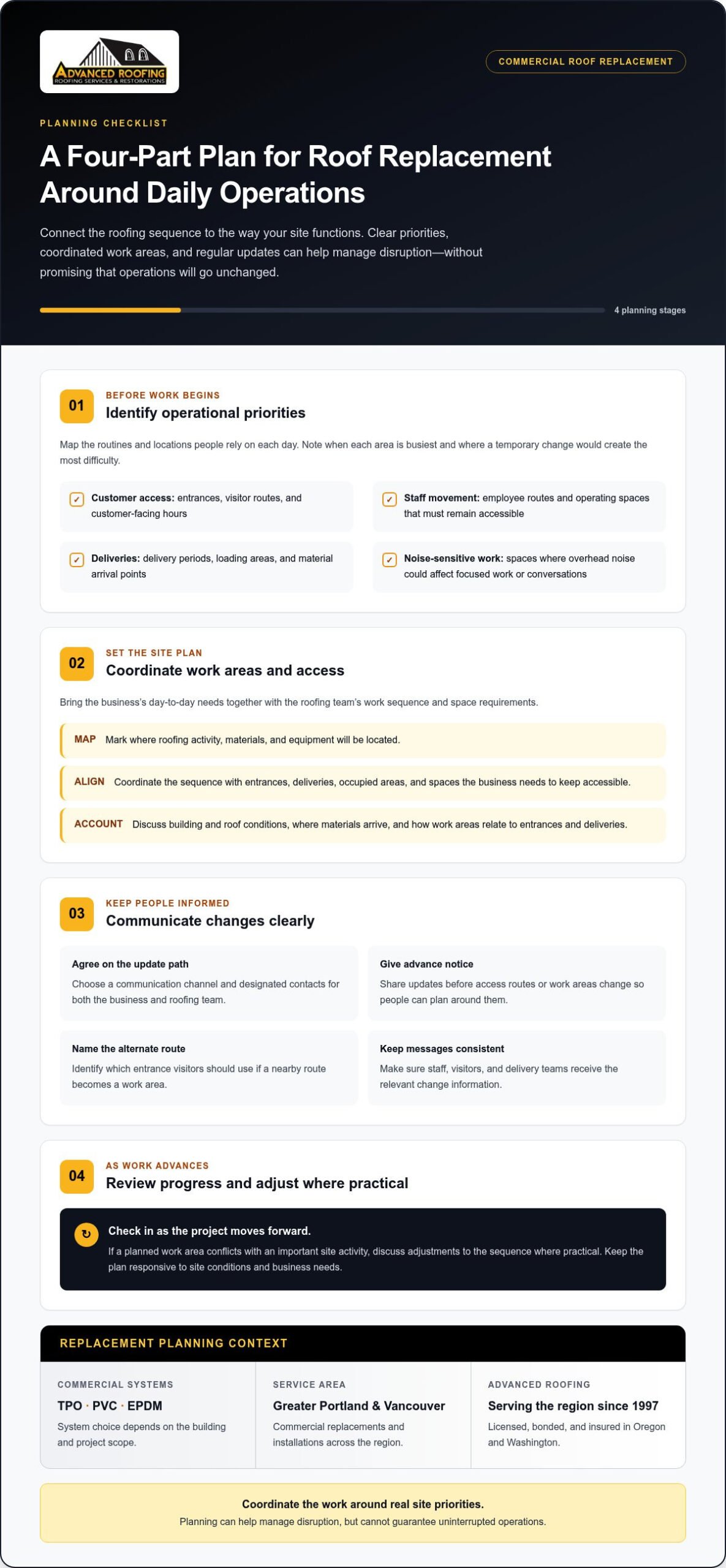
- Identify operational priorities. Note critical entrances, delivery periods, customer-facing hours, and areas where noise could affect focused work.
- Coordinate work areas. Map where roofing activity, materials, and equipment will be located, then align the sequence with the spaces your business needs to keep accessible.
- Communicate changes. Agree on a communication channel and designated contacts for both the business and roofing team. Share advance notice when access routes or work areas will change so staff, visitors, and delivery teams can plan.
- Review progress. Check in as work advances. If a planned work area conflicts with an important site activity, discuss adjustments to the sequence where practical.
How should businesses coordinate schedules, access, and communication?
Make the plan specific to your property. For example, identify which entrance visitors should use if a nearby route becomes a work area, and how staff will learn about that change. Set clear expectations for who shares updates and who receives them. This keeps information consistent rather than leaving employees to rely on informal messages.
Identify priorities, coordinate work areas, communicate changes, and review progress. That sequence gives business leaders and the roofing team a shared framework for avoiding business disruption during reroofing, while leaving room to respond to site conditions. For added context on planning and workmanship, review best practices for commercial roofing installations and this commercial roofing contractor selection guide. Businesses planning a replacement can also explore commercial roof replacement planning with Advanced Roofing.
What to Expect from Advanced Roofing During a Commercial Roof Replacement
Advanced Roofing is a family-owned and operated commercial roofing contractor serving Greater Portland and Vancouver. For an occupied building, a replacement involves more than selecting a roofing system: the project plan also needs to account for the property’s layout, business activity, and the work sequence. The team can discuss these site-specific considerations with you so expectations and coordination are part of the conversation from the outset.
Advanced Roofing installs and replaces commercial flat-roof systems, including TPO, PVC, and EPDM. The right approach depends on the building and project scope. Discussing the roofing system alongside access, work areas, and the needs of your business can help connect installation planning to the realities of operating on site. Coordination can help manage disruption, though it can’t guarantee that daily activity will remain unchanged.
How local commercial roofing experience supports a more organized project
Advanced Roofing serves businesses across the Northwest, including Vancouver and Greater Portland. The company is fully licensed, bonded, and insured in Oregon and Washington, and has served the region since 1997. Familiarity with these communities brings local context to conversations about a commercial roof replacement, while project planning remains tailored to each building and its operations.
As planning moves forward, share the operational priorities that matter most to your team. Advanced Roofing can discuss how the replacement scope, roofing system, and work sequence relate to your site, helping you prepare for the project without promising disruption-free operations.
If you’re planning a commercial replacement, Request Free Roof Replacement Estimates to start a project-specific conversation with Advanced Roofing.
Take the Next Step Toward a Well-Planned Replacement
Planning for a roof replacement is also a chance to set a clear point of contact between facilities and operations before work begins. Gather your site priorities, questions about the replacement system, and any operational constraints in one place. That gives the project conversation a practical starting point and helps your team make informed decisions without assuming every interruption can be avoided.
For businesses focused on avoiding business disruption during reroofing, an early, project-specific discussion can help connect operational needs with replacement planning. Advanced Roofing is a PABCO Premier Contractor, and the team can discuss the needs of your commercial property as part of a roof replacement estimate. Request Free Roof Replacement Estimates and take a clear, considered next step toward protecting your building and keeping your business prepared.
Frequently Asked Questions
Can a business remain open during a commercial roof replacement?
A business may be able to remain open, but continued operation depends on the building, replacement scope, and site conditions. Consider whether public access, essential services, or specific work areas need to remain available. Advance coordination supports avoiding business disruption during reroofing, but even a careful plan can’t guarantee uninterrupted operations.
How can a business prepare employees and customers for reroofing?
Share clear directions for entrances, parking, and spaces affected by the work. Businesses in Vancouver, Battle Ground, Camas, Ridgefield, La Center, Longview, Kelso, Woodland, Castle Rock, and Kalama can assign a staff contact to relay updates, post notices at usual entry points, and revise visitor instructions when routes change. Keep messages practical and consistent.
Will commercial reroofing affect rooftop equipment?
Rooftop equipment should be included in replacement planning because its location and surrounding roof conditions may affect how work is sequenced. Share an equipment inventory or site plan with the roofing team, and identify units that support essential business functions. The project discussion can account for these site-specific factors without assuming a particular shutdown, relocation, or protection procedure.
What happens if weather affects a commercial roof replacement?
Weather can influence outdoor roofing work and which tasks are practical under current site conditions. The team may need to reassess sequencing if conditions affect the work area or access for materials. Keep internal plans flexible and use the agreed communication channel for updates. The timing and adjustments depend on the project and conditions at the property.