Most commercial flat roofs in the Northwest don’t fail because of the material; they fail because the seams weren’t built for nine months of standing water. If you’re managing a property, you’ve likely felt the stress of a midnight leak or watched energy bills climb due to an outdated roof. It’s frustrating to invest in repairs only to have dampness return. We understand your building is an investment that deserves protection from our unique climate.
This guide explains why TPO roofing in Southwest Washington is the gold standard for creating a monolithic, leak-proof barrier. You’ll learn how heat-welded seams and high reflectivity lower cooling costs and provide thirty years of peace of mind. We’ll walk through 2026 installation standards and maintenance tips that ensure your flat roof stays dry, no matter how hard the rain falls.
Key Takeaways
- Discover how TPO’s thermoplastic properties create a single, fused barrier that effectively eliminates the risk of seam failure during heavy Northwest storms.
- Compare the durability of heat-welded seams against traditional torch-down methods to see why modern membranes offer superior protection for flat roofs.
- Learn why professional installation of TPO roofing portland is the essential factor in achieving a 20 to 30 year lifespan with lower energy costs.
- Explore the No Dollar Limit (NDL) warranty and how choosing a certified contractor ensures your commercial investment remains fully covered.
What is TPO Roofing and Why is it the Portland Standard?
TPO, or Thermoplastic Polyolefin, has become the dominant choice for commercial buildings across the Rose City. It’s a single-ply, reflective membrane designed specifically for flat or low-slope structures. What is TPO Roofing? Essentially, it’s a blend of rubber and plastic that offers the flexibility of EPDM with the superior seam strength of PVC. In our damp climate, traditional roofs often struggle with moisture cycles that lead to mold and rot. TPO roofing portland stands out because its surface is naturally resistant to microbial growth, making it a reliable shield against the constant Pacific Northwest drizzle.
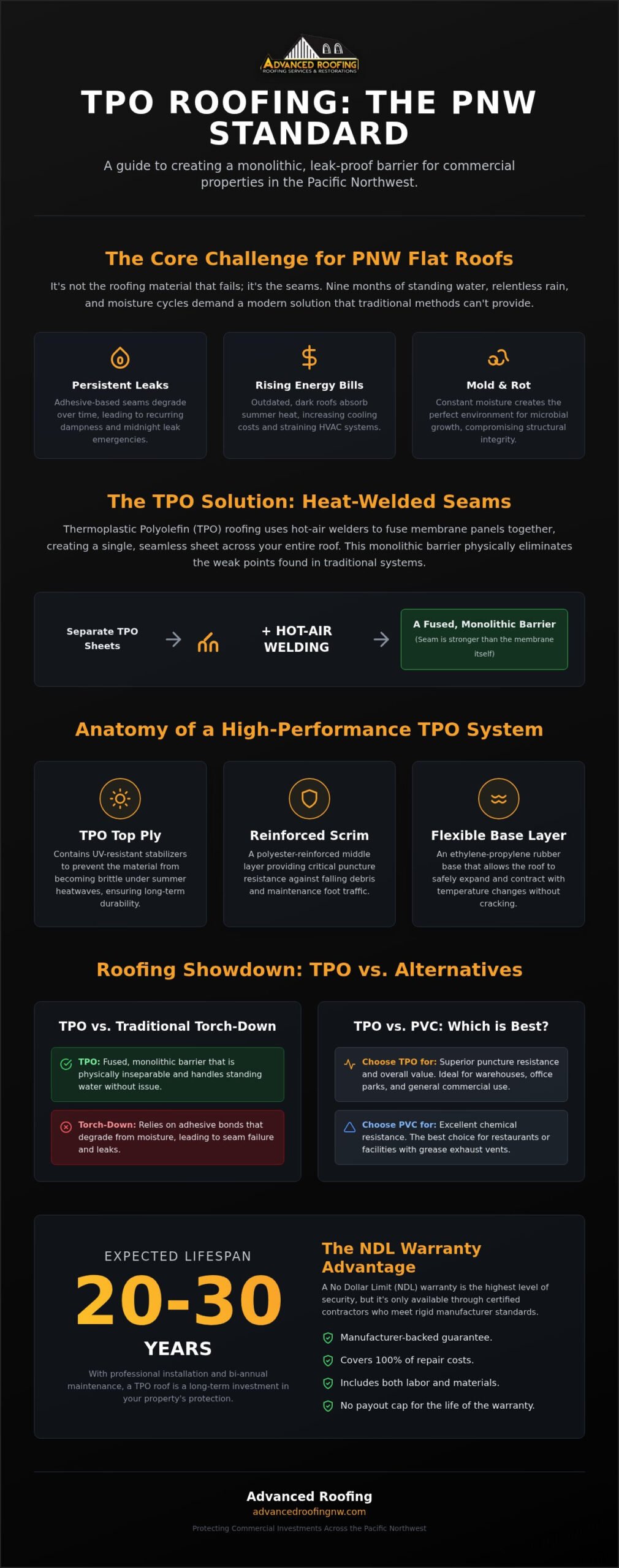
The real magic lies in the thermoplastic nature of the material. During installation, we use hot-air welders to melt the edges of the sheets together. This process fuses the layers into a single, monolithic barrier. Unlike older torch-down systems that rely on adhesives or open flames, these welded seams are physically stronger than the membrane itself. This creates a watertight seal that doesn’t peel or crack when water sits on the roof during our long winters.
The Anatomy of a High-Performance TPO System
A quality membrane isn’t just one layer of plastic; it’s a sophisticated sandwich of three distinct components. Each layer plays a specific role in defending your building from the elements. When we install TPO roofing portland, we focus on these three critical levels:
- The Base Layer: An ethylene-propylene rubber base that provides foundational flexibility and allows the roof to expand and contract.
- The Reinforced Scrim: A polyester-reinforced middle layer. This is vital for Northwest properties because it provides the puncture resistance needed to handle falling debris or maintenance foot traffic.
- The TPO Top Ply: This upper layer contains UV-resistant stabilizers. While we often focus on rain, Portland’s summer heatwaves can bake a roof. These stabilizers prevent the material from becoming brittle, ensuring it meets local wind uplift requirements for years.
Comparing TPO to Other Flat Roof Solutions in the PNW
Traditional torch-down roofing relies on adhesives or open flames to seal seams. Over time, Portland’s relentless rain can cause these adhesive bonds to fail, leading to persistent leaks. TPO roofing portland offers a more reliable alternative. By using hot-air welding, we create a bond that’s physically inseparable. This monolithic layer handles standing water much better than older modified bitumen systems, providing the stability your business needs.
Our local storms bring significant wind pressure, especially near the Columbia River Gorge. To meet specific building codes, commercial roofing contractors in Portland must prioritize precision in mechanical fastening or fully adhered systems. These methods ensure the membrane stays locked to the deck during a winter gale. We focus on these technical details to protect your investment for the long haul.
TPO vs. PVC: Which Membrane Wins in Portland?
Choosing between these two single-ply membranes depends on your building’s specific use. PVC excels in chemical resistance, making it the best fit for restaurants with grease exhaust vents. However, TPO provides superior puncture resistance and better overall value for warehouses and office parks. It meets the ASTM D6878 industry standard for physical properties, ensuring it remains flexible through decades of use.
Modern TPO handles our “wet-dry” cycles without the plasticizer migration issues found in some older PVC products. The high reflectivity of white TPO also helps local buildings qualify for energy-efficiency incentives. If you’re weighing these options, our team can provide a free on-site estimate to determine the best fit for your facility. We take pride in helping our neighbors make the right choice for their property.
Ensuring Longevity: TPO Maintenance and the NDL Advantage
A TPO roof can easily protect your building for 20 to 30 years, but reaching that milestone depends entirely on the initial craftsmanship. We’ve seen many systems fail prematurely because of poor seam welding or incorrect fastening. For the highest level of security, we recommend a No Dollar Limit (NDL) warranty. This manufacturer-backed guarantee covers the full cost of repairs, including labor and materials, without a payout cap. Choosing a certified contractor for your TPO roofing portland ensures the system meets the rigid standards required to access this level of protection.
The PNW Maintenance Schedule for TPO
Flat roofs in our region face unique challenges. Constant pine needles and leaves can clog drains, causing “ponding” water that stresses the membrane. We advise bi-annual inspections to clear debris and check seam integrity. If your property is in a wooded area, staying on top of roof repair in Vancouver, WA is essential to prevent small clogs from becoming structural issues.
- Drain Clearing: Remove organic debris every spring and fall to prevent standing water.
- Seam Inspections: Check heat-welded areas for signs of physical stress or wind uplift.
- Ventilation Checks: Verify that structural vents remain unobstructed to manage winter humidity.
While the smooth surface of TPO naturally resists the thick moss that plagues shingle roofs, algae can still form in shaded spots. Use only manufacturer-approved cleaners; harsh chemicals can degrade the membrane and void your warranty. Finally, don’t overlook your building’s ventilation. Without it, humid Northwest air can cause condensation to trap beneath the membrane, leading to hidden rot in the roof deck during our long, wet winters. Regular care isn’t just about cleaning; it’s about protecting your long-term investment.
Protect Your Commercial Investment for the Long Term
Selecting the ideal membrane for your flat roof is a vital step in safeguarding your building’s integrity and reducing energy costs. TPO creates a superior, monolithic barrier through heat-welded seams that thrive in our specific climate. To reach that 30-year lifespan, focus on the precision of your initial installation and the security of a manufacturer-backed NDL warranty. Our team at Advanced Roofing has spent over 40 years as a family-owned business specializing in Northwest flat roof systems. As certified experts, we take pride in delivering the master craftsmanship your property deserves. Get a free on-site TPO roofing estimate for your Portland or Vancouver property from Advanced Roofing. Let’s work together to ensure your TPO roofing portland provides the peace of mind you need to focus on your business.
Common Questions About Commercial TPO
How long does a TPO roof typically last in Portland?
A TPO roof typically lasts between 20 and 30 years in our Northwest climate. This longevity depends on the quality of the heat-welded seams and effective drainage. Since Portland sees over 150 rainy days annually, we ensure every TPO roofing portland project reaches its full potential by focusing on master craftsmanship and using only premium, durable materials that stand up to constant moisture.
Is TPO roofing better than PVC for commercial buildings in the PNW?
TPO’s generally better for warehouses and retail spaces because it’s more cost-effective and offers higher puncture resistance. PVC is the standard for restaurants or facilities that exhaust chemicals and grease, as it won’t break down when exposed to those oils. For most local business owners, TPO roofing portland provides the best long-term value and energy savings in our temperate climate.
Can TPO roofing be installed over an existing flat roof?
You can often install a new TPO membrane over an existing flat roof, provided there’s only one previous layer and the underlying deck is sound. Building codes in Oregon and Washington generally limit roofs to two layers. We always perform a core sample during our inspection to check for trapped moisture, as covering wet insulation will eventually lead to structural rot.
What is the best way to clean a TPO roof to prevent moss growth?
Clean your roof using a soft-bristle brush and a mild, manufacturer-approved detergent. Avoid using high-pressure washers, as they can damage the membrane’s surface or compromise the heat-welded seams. Regularly clearing organic debris like pine needles and leaves is the most effective way to prevent moss from taking root. This simple maintenance protects your investment and keeps the reflective surface working efficiently.