What if the biggest threat to your Washington home isn’t the rain hitting your shingles, but the air trapped just beneath them? It’s a common oversight for many neighbors in our community. You work hard to keep the Pacific Northwest dampness out, yet without a way for your attic to breathe, that moisture stays locked inside. This leads to frustrating issues like winter condensation on rafters and shingles that wear out years before they should.
Realizing the roof ventilation importance for wa homes is the first step toward protecting your property’s long term value. We know you want peace of mind and a roof that lasts 25 years or more. This guide explains how proper airflow prevents toxic mold growth and lowers summer cooling costs. You’ll also discover which specific vent systems handle our unique weather patterns best so you can keep your family safe and dry.
Key Takeaways
- Master the “Stack Effect” to understand how continuous airflow regulates attic temperature and protects your home’s structural integrity.
- Spot early warning signs of poor ventilation, such as cupping shingles or persistent moss growth on your roof’s north-facing slopes.
- Discover the roof ventilation importance for wa homes and how the right system defends against the relentless moisture and humidity of the Northwest.
- Learn why a tailored approach to ridge, soffit, and gable vents is necessary to meet local building codes and extend your roof’s lifespan.
The Science of Airflow: Why Your Washington Roof Needs to ‘Breathe’
Think of your roof as a respiratory system for your home. Roof ventilation is the continuous exchange of air that regulates attic temperature and humidity levels. Without this steady flow, your attic becomes a stagnant box of trapped air. Recognizing the roof ventilation importance for wa homes helps you avoid structural damage that many homeowners overlook until it’s too late.
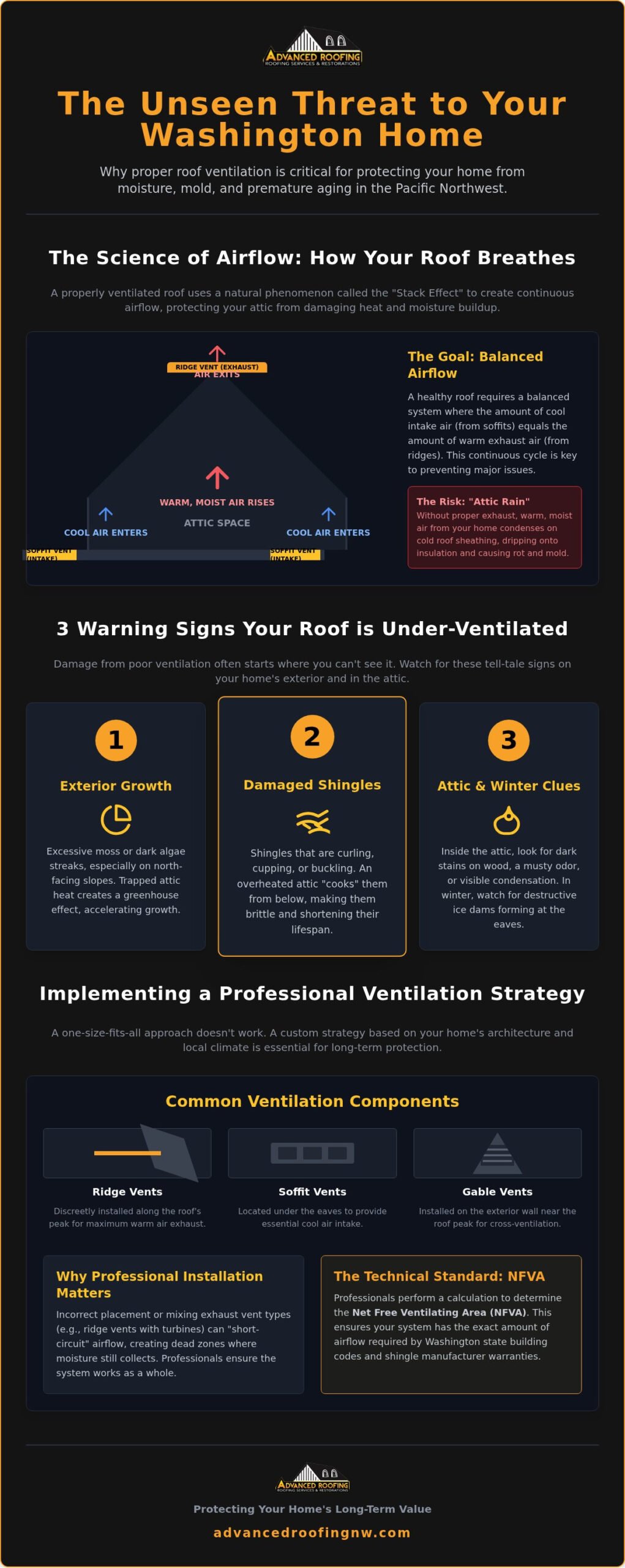
This process relies on a natural phenomenon called the "Stack Effect." Cool, fresh air enters through the soffit vents at your roof’s eaves. As this air warms up, it naturally rises and exits through the ridge vents at the peak. This constant cycle is vital for maintaining a healthy home environment. In our region, this movement is critical to prevent "attic rain." This happens when warm, moist air from your living space hits cold rafters and condenses into water droplets that drip onto your insulation. Additionally, maintaining proper airflow is a strict requirement for shingle roof replacement warranties. Most manufacturers will not honor claims if they find the attic was poorly vented.
Combating the Pacific Northwest Humidity
Our 9-month damp cycle creates a constant threat of internal moisture buildup. When humidity lingers in a dark attic, it provides the perfect breeding ground for wood rot in your roof deck and rafters. Understanding the roof ventilation importance for wa homes means recognizing that dry wood is strong wood. We always aim for a system that protects the integrity of your home’s bones. Balanced ventilation is defined as the equal ratio of intake air to exhaust air.
3 Warning Signs Your SW Washington Roof is Under-Ventilated
Identifying issues early saves you from expensive surprises. Many residents in the Vancouver area overlook the roof ventilation importance for wa homes because the damage starts where they can’t see it. However, the exterior often tells the story. Look for excessive moss or algae growth on your north-facing slopes. While moss is common in the Northwest, trapped attic heat acts like a greenhouse, fueling rapid growth even in cooler months.
Check your shingles for curling or "cupping." This happens when an overheated roof deck literally "cooks" the shingles from the underside, making them brittle. These visual cues often signal the need for a professional roof repair in Vancouver WA before the damage reaches your home’s interior. Inside the attic, watch for dark spots on plywood or a lingering musty odor, which indicate mold growth from trapped moisture. If you’ve noticed these signs, a professional roof inspection can help determine if your ventilation needs an upgrade.
The Hidden Cost of Poor Attic Airflow
In towns like Camas or Ridgefield, trapped summer heat forces HVAC systems to work overtime, spiking your utility bills. In winter, poor airflow causes "ice dams." This happens when uneven roof temperatures melt snow that then refreezes at the cold eaves, tearing at your gutters. Use this quick checklist after a light frost to identify "hot spots":
- Look for areas where frost melts significantly faster than the rest of the roof peak.
- Check for icicles forming only on specific sections of the eaves.
- Feel for heat radiating from the attic ceiling on a sunny afternoon.
Implementing a Professional Ventilation Strategy for Your Home
Every neighborhood in Clark County presents different challenges, from the wind-swept hills of Camas to the damp, shaded lots in Vancouver. A one-size-fits-all approach fails here because architectural styles and local microclimates vary wildly. Realizing the roof ventilation importance for wa homes means selecting the right components for your specific structure rather than relying on generic solutions.
Common vent types include ridge vents for discreet exhaust along the peak, soffit vents for intake under the eaves, and gable vents for cross-ventilation. Our team performs detailed inspections to calculate the Net Free Ventilating Area (NFVA). This technical calculation ensures your attic has the exact amount of airflow required by WA building codes. If you have a gable roof, specific configurations are needed to ensure moisture doesn’t get trapped in the high peaks where it can cause the most damage.
Why Professional Installation Matters
Proper placement is as vital as the vents themselves. If intake and exhaust vents aren’t positioned correctly, you can "short circuit" the system. This happens when air enters and exits too quickly in one area, leaving "dead zones" where moisture still collects and rots your decking. We also caution against mixing different exhaust types, like combining ridge vents with turbines, as this disrupts the natural airflow cycle. With experience in the Northwest, we specialize in customizing these systems for local homes. We’ve protected our community since 1997, and we stand behind every vent we install to ensure your long term peace of mind.
Secure Your Home’s Future with Proper Airflow
Your attic’s ability to breathe determines the lifespan of your entire roofing system. We’ve explored how a balanced exchange of air prevents "attic rain" and structural rot in our damp climate. Recognizing the roof ventilation importance for wa homes is the first step toward avoiding premature failures and high energy bills. Don’t wait for visible mold or curling shingles to compromise your safety. Our family-owned team has served Vancouver, Camas, and Ridgefield since 1997. We bring Since 1997 of local expertise to every project. Our certified Master Craftsmen treat every roof like their own, ensuring your ventilation meets the highest standards of durability and protection.
Protect your home with a free ventilation and roofing estimate from Advanced Roofing today. We look forward to helping you safeguard your investment for many years to come.
Common Questions About Northwest Roof Ventilation
Will adding more vents to my roof cause leaks during heavy Washington rain?
No, properly installed vents are designed to be weather-tight even in our heavy Pacific Northwest storms. We use high-quality flashing and sealants to ensure every penetration is secure for neighbors in Battle Ground or Camas. In fact, stagnant air is a bigger threat than the rain. Our team has Since 1997 of experience ensuring that your roof remains dry.
How do I know if my current attic insulation is blocking my roof vents?
You can check this by looking into the eaves or the lowest points of your attic. If you see fiberglass or cellulose packed tightly against the roof deck, it is likely blocking your soffit vents. This is a common issue in Vancouver and Ridgefield homes. We often install baffles to keep insulation away from these openings, which maintains the roof ventilation importance for wa homes.
Can I install roof vents myself, or do I need a licensed contractor?
It is highly recommended that you hire a licensed, bonded, and insured contractor for any roof penetrations. Cutting into your roof deck requires precision to maintain structural integrity and prevent leaks. DIY mistakes can void your shingle manufacturer warranty. As a family-owned business since 1997, we prioritize the safety and long-term protection of your home over quick, risky fixes.
Does a new roof automatically come with a new ventilation system?
A standard roof replacement should always include an evaluation and update of your ventilation system to meet modern building codes. We don’t just swap shingles; we ensure the intake and exhaust are balanced for the specific layout of your home. This approach is essential for protecting your investment and ensuring your new roof lasts for its full 25 or 30 year lifespan.