Could your roof be quietly failing even if there isn’t a single drop of water on your living room floor? Living in the Northwest, we all understand that our climate is beautiful but incredibly demanding on our homes. It’s normal to feel a bit of anxiety when the rain starts and you notice that familiar green glow of moss creeping across your shingles. You’ve worked hard for your home, and you don’t want hidden moisture to turn into structural rot or a high-priced repair bill during a winter storm.
Identifying common roof problems in Washington State is the first step toward true peace of mind. This 2026 guide breaks down how local weather impacts your roof and what specific signs to watch for to avoid a full replacement. You’ll find actionable maintenance steps to keep your attic dry and your investment safe. Advanced Roofing is here to provide the honest, expert perspective you need to protect your family’s home for years to come.
Key Takeaways
- Understand how our humid Northwest climate fuels moss and algae growth that can physically degrade your shingles over time.
- Learn why wind-driven rain requires specialized flashing techniques to keep water from being pushed under your roof’s protective layers.
- Identify the most common roof problems in washington state early to save money and avoid the stress of emergency repairs during storm season.
- Implement a simple four-step seasonal maintenance plan to extend the life of your roof and protect your family’s investment.
The Moisture Crisis: Moss, Algae, and Biological Decay
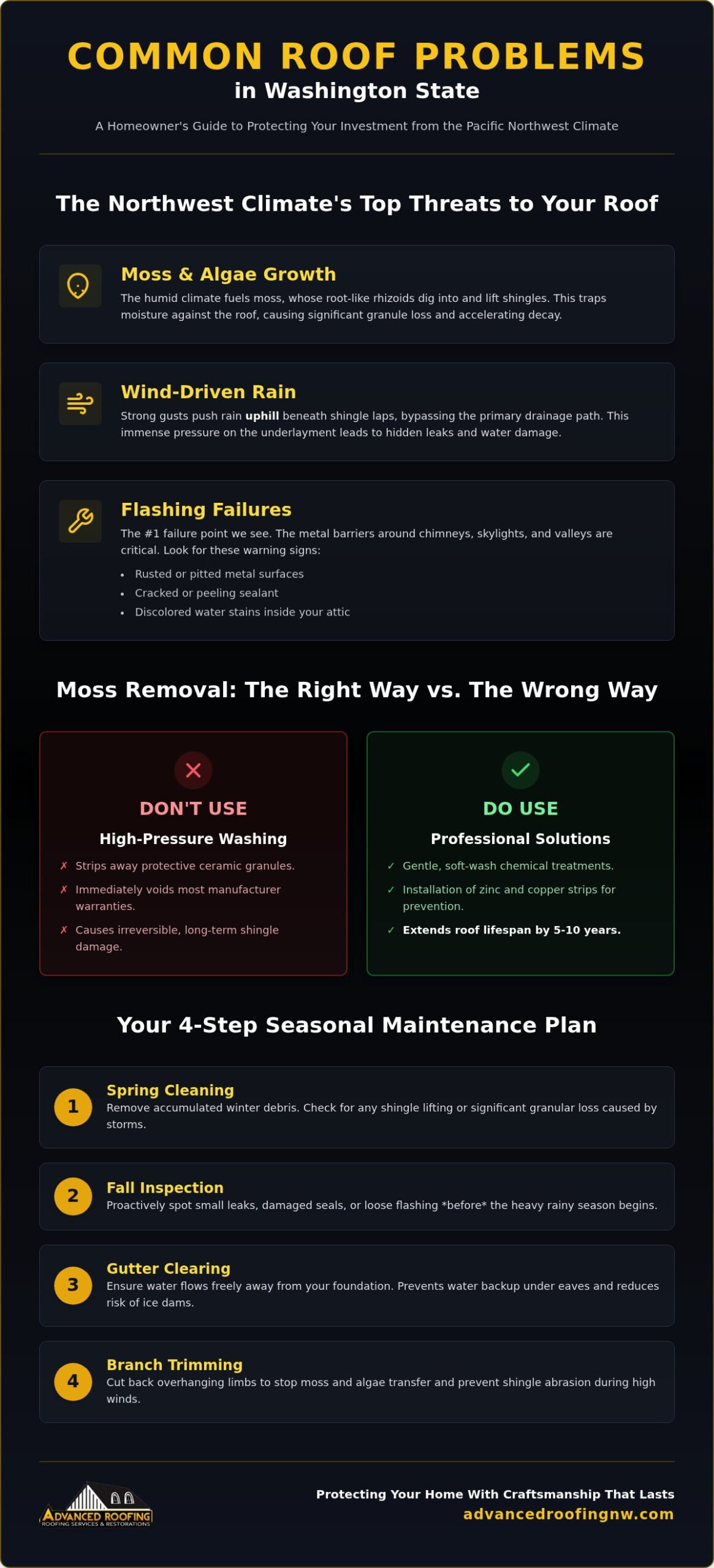
Washington’s mild temperatures and persistent humidity create a greenhouse effect on your roof. This environment is the perfect breeding ground for moss and Gloeocapsa Magma, the black algae responsible for those unsightly dark streaks. While algae is primarily a cosmetic issue, moss represents a structural threat. Moss uses tiny root-like structures called rhizoids to anchor itself. These rhizoids dig deep into the limestone filler of your asphalt shingles, causing significant granular loss and physical lifting. Unlike simple algae streaks, thick moss carpets act like a sponge. They hold water against the roof for weeks, even during brief dry spells, which accelerates the breakdown of the underlying materials. These are among the most common roof problems in washington state that we see daily.
The Danger of Improper Moss Removal
Many homeowners attempt to solve the problem with a high-pressure washer, but we strongly advise against this. High-pressure water strips away the protective ceramic granules that shield your shingles from UV rays; this often voids your manufacturer’s warranty immediately. It’s a quick fix that causes long-term damage. Instead, we recommend soft-wash chemical treatments or the installation of zinc and copper strips. These methods are the industry standard for 2026 and provide protection without compromising your shingles. For families in neighborhoods like Battle Ground or Camas, consistent, gentle maintenance can extend a roof’s lifespan by 5 to 10 years. Identifying these common roof problems in washington state early prevents hidden rot from reaching your home’s framing. We believe in helping our neighbors protect their investments with craftsmanship that lasts, rather than high-pressure tactics that cause more harm than good.
Structural Vulnerabilities: Wind-Driven Rain and Flashing Failures
Northwest storms bring more than just heavy downpours; they bring persistent wind that changes how water behaves on your home. In our region, wind-driven rain is one of the most common roof problems in washington state. Shingles are designed to shed water downward, yet strong gusts can actually push moisture uphill and underneath shingle laps. This bypasses the primary drainage path and puts immense pressure on your underlayment. If your roof wasn’t installed with these specific local wind patterns in mind, you might face hidden leaks that don’t show up until structural damage has already begun.
During winter cold snaps in cities like Kelso or Longview, ice damming becomes a serious concern. When heat escapes your attic, it melts snow on the roof. That water then refreezes at the cold eaves, creating a dam that forces standing water back under your shingles. Identifying these common roof problems in washington state early can prevent a minor leak from becoming an expensive emergency.
Identifying and Fixing Chimney Flashing Leaks
Flashing remains the number one failure point we see during inspections. It’s the metal barrier installed around chimneys, skylights, and valleys to direct water away from seams. To check your roof’s health, look for these warning signs:
- Rusted or pitted metal surfaces
- Cracked or peeling sealant around the chimney base
- Discolored water stains on the wood inside your attic
In a standard gable roof, we use a combination of step flashing and counter-flashing. Step flashing is interwoven with shingles, while counter-flashing is embedded into the chimney mortar. If these components fail, you need a professional touch to restore the seal. You can find detailed steps on these fixes in our comprehensive guide to roof repair in Vancouver, WA. Protecting your home starts with these small, vital details.
Proactive Protection: Seasonal Maintenance and Local Expertise
Preventing common roof problems in washington state requires a shift from reactive repairs to proactive care. We recommend a simple, four-step seasonal plan to protect your home and extend the life of your materials. Our team has seen how common roof problems in washington state can spiral into major expenses without proper oversight, so consistency is key. Our free on-site estimate isn’t just a sales pitch; it’s a diagnostic tool we use to identify hidden rot and structural vulnerabilities before they require an emergency response.
- Spring cleaning: Remove winter debris and check for any shingle lifting or granular loss.
- Fall inspection: Spot small leaks or loose flashing before the heavy rainy season begins.
- Gutter clearing: Ensure water flows freely away from your foundation and roof eaves to prevent backup.
- Branch trimming: Cut back overhanging limbs to stop moss transfer and prevent abrasion damage during high winds.
If your roof has reached the end of its functional life, working with a roof replacement in Vancouver, WA specialist is essential. Local experts understand the specific Washington L&I requirements and building codes that national chains often overlook. We ensure every project meets the rigorous standards necessary for our damp, windy climate.
Why Local Vancouver and SW Washington Knowledge Matters
Living near the Columbia River Gorge means your home faces unique wind patterns that can tear through standard roofing materials. These local environmental factors directly influence the new roof cost in Vancouver, WA, as we prioritize reinforced installation techniques and premium materials designed for the Northwest. Always choose a contractor who’s licensed, bonded, and insured specifically for the Vancouver and Portland metro area. As a family-owned business with 20+ years of local service, we stand behind our work because we’re your neighbors. We treat every project as if it were our own home, ensuring your peace of mind and long-term protection.
Secure Your Home Against the Northwest Elements
Protecting your home from common roof problems in washington state is about staying ahead of the moisture and wind. We’ve explored how moss can degrade shingles and why wind-driven rain requires specialized flashing. By following a seasonal maintenance schedule and choosing materials designed for our unique climate, you ensure your roof stands strong for decades. These proactive steps keep your attic dry and prevent the hidden structural rot that often leads to costly emergency repairs.
Advanced Roofing has served the Vancouver and Portland metro areas for over 20 years. As a family-owned business, we’re fully licensed, bonded, and insured to protect your family and your investment. Our master craftsmen are here to help you navigate every storm with confidence and integrity. Ready to gain total peace of mind? Request Your Free On-Site Estimate from Advanced Roofing today. Your home is your greatest asset; let’s keep it safe together.
Frequently Asked Questions
Is moss on my roof actually a problem or just an eyesore?
Moss is a serious structural threat rather than a simple cosmetic issue. It acts as a sponge that traps moisture against your shingles for weeks, even during brief dry spells. The root-like rhizoids dig into the shingle’s limestone filler, causing granular loss and lifting. Over time, this leads to rot and leaks, making it one of the most common roof problems in washington state.
How often should I have my roof inspected in Washington state?
We recommend a professional inspection at least once a year, ideally in the fall before the heavy rains return. For homes in heavily wooded areas like Battle Ground or Ridgefield, a second spring check helps clear winter debris. Regular inspections allow us to identify minor issues before they turn into expensive repairs, ensuring your investment remains protected against our demanding Northwest climate.
Can I pressure wash my roof to remove moss and debris?
You should never use a high-pressure washer on your asphalt shingles. The intense force strips away the protective ceramic granules and can easily void your manufacturer’s warranty. This leaves your roof vulnerable to UV damage and accelerated wear. Instead, we use gentle soft-wash treatments and zinc strips to safely manage biological growth while preserving the integrity and lifespan of your roofing system.
What are the signs that my roof flashing is failing?
Look for rusted metal, cracked sealant, or water stains on your attic rafters. Flashing is the thin metal installed at roof intersections, such as chimneys, skylights, and valleys. If these seals fail, water seeps directly into your home’s structure. In cities like Longview or Camas, wind-driven rain often finds these weak points, so checking for loose or pitted metal is a vital preventative step.