In the Pacific Northwest, a commercial roof is more than just a building component; it’s a constant battle against moisture management. If you’ve spent the last rainy season worrying about ponding water or rising utility costs, you aren’t alone. It’s difficult to choose between TPO, EPDM, or metal when you just want a facility that stays dry and energy-efficient for the next Since 1997. We understand that protecting your local business means making a smart, long-term investment in the right commercial roofing materials.
This guide simplifies that decision by highlighting the most durable options for the Portland and Vancouver climate. You’ll discover how to meet the 2025 Oregon Structural Specialty Code requirements while maximizing your building’s insulation. We will compare the lifespans of popular systems and provide a clear path toward a leak-free roof that pays for itself through improved energy performance and neighborhood-tested reliability.
Key Takeaways
- Identify the specific roofing challenges unique to the Northwest, from constant drizzle to moss growth, and how to combat them effectively.
- Compare the long-term performance and reflective properties of different commercial roofing materials to maximize your building’s energy savings.
- Stay compliant with the latest 2026 regional building codes to ensure your roof replacement meets all current R-value and insulation standards.
- Learn how to weigh initial installation costs against long-term maintenance to secure the highest return on your facility investment.
Essential Commercial Roofing Materials for the Pacific Northwest
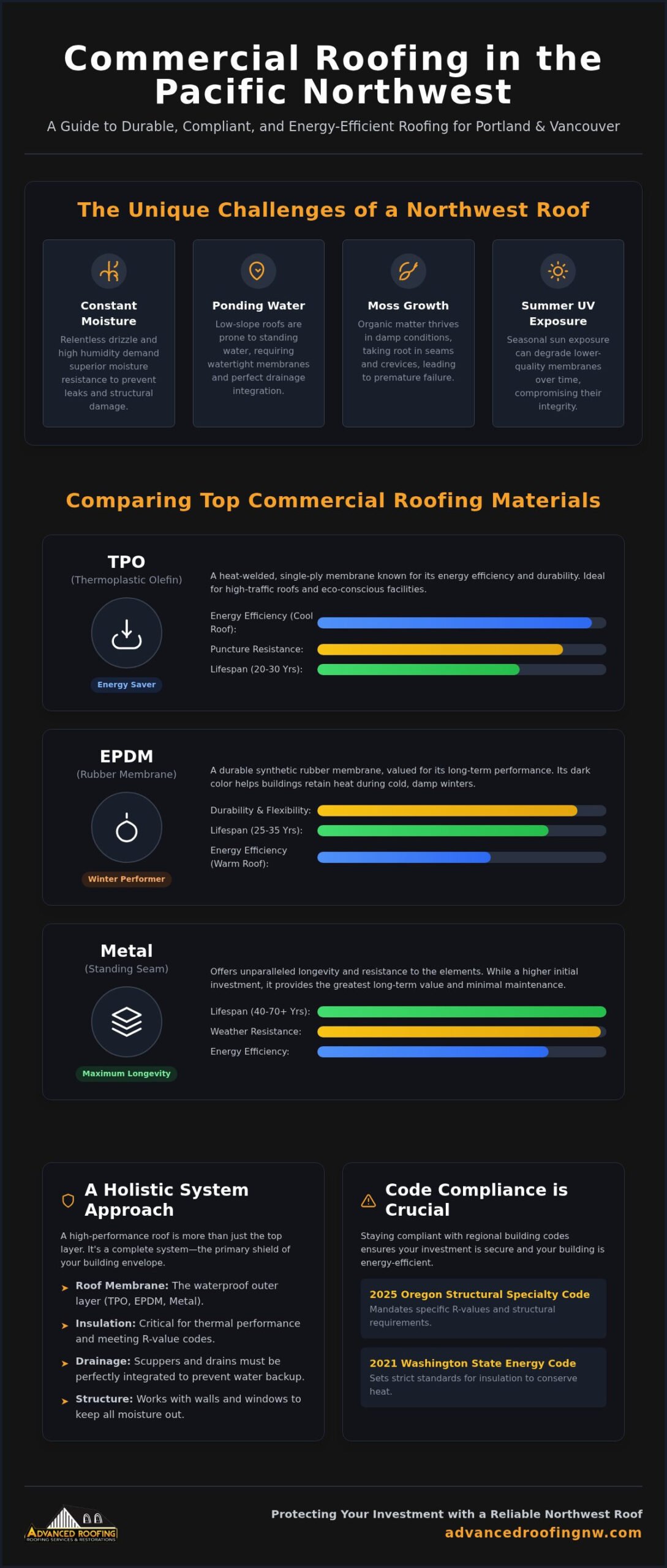
Portland and Vancouver facility managers deal with a specific set of environmental pressures that require specialized solutions. Unlike the dry heat of the Southwest, our region faces relentless drizzle and high humidity for most of the year. These conditions make choosing the right common commercial roofing materials a matter of long-term building survival. We prioritize materials that offer superior moisture resistance and structural integrity to ensure your property remains protected through every season.
Most local projects fall into three primary categories: single-ply membranes, bituminous systems, and metal roofing. Low-slope roofs are the standard for industrial warehouses, requiring watertight membranes that prevent damage from ponding water. Steep-slope designs allow for more traditional materials but still face our region’s biggest nuisance: moss growth. Constant dampness encourages organic matter to take root in seams and crevices, while summer UV exposure can degrade lower-quality membranes over time. Selecting high-grade commercial roofing materials is the first step in preventing these common Northwest issues.
The Role of the Building Envelope in Material Selection
A roof doesn’t exist in a vacuum. It’s the primary shield of your building envelope, working in tandem with walls, windows, and cladding to keep moisture out. We view the roof as a complete system rather than just a top-layer material. In high-rainfall areas like Vancouver, your drainage systems, including scuppers and internal drains, must be perfectly integrated with your chosen commercial roofing materials. If this system approach is ignored, even the most expensive membrane can fail when water backs up into the building’s structural layers. We focus on this holistic protection to give you peace of mind for decades. For businesses with properties in other climates, specialists like elpasoroofings.com offer similar comprehensive expertise in managing regional environmental stressors.
Thermal Performance and R-Values in the Northwest
In our climate, the insulation layers beneath the membrane are just as vital as the surface material. The 2021 Washington State Energy Code and the 2025 Oregon Structural Specialty Code mandate specific R-values to keep heat inside during damp winters. Dark EPDM absorbs heat, which can be a benefit in cold months, while white TPO keeps buildings cooler in July. Because flat roofs lack natural attic ventilation, they require specialized rigid insulation boards to prevent thermal bridging. We ensure every layer of your roofing system meets these strict local standards to protect your bottom line. If you’re ready to improve your building’s efficiency, scheduling a professional roof inspection is the best place to start.
Choosing the Best Material for Your Portland or Vancouver Facility
Selecting the right commercial roofing materials requires looking beyond the initial bid to the total cost of ownership over two decades. While budget constraints are real, choosing a system based solely on the lowest installation price often leads to expensive repairs when the relentless Portland rain finds a weak seam. We help facility managers find the “sweet spot” where high-performance durability meets fiscal responsibility. This balance is best achieved by partnering with experienced commercial roofing contractors in Portland who understand the 2025 Oregon Structural Specialty Code and how it impacts your specific building type. Local expertise ensures your project stays compliant while maximizing every dollar spent on protection.
Maintenance and Longevity: Protecting Your Investment
Routine maintenance is a non-negotiable part of owning a facility in our damp Northwest climate. Moss, fallen needles, and organic debris can trap moisture against your membrane, leading to premature failure if left unaddressed. Materials like PVC and TPO are excellent choices for roofs with heavy foot traffic or frequent HVAC maintenance needs because they resist punctures and chemical exposure better than older, traditional systems. We recommend scheduling a professional roof inspection to evaluate your current system’s health and determine which commercial roofing materials best fit your long-term goals. Taking this proactive step helps you avoid the stress of emergency leaks and ensures your investment stays protected for the next Since 1997 and beyond.
Protect Your Investment with a Reliable Northwest Roof
Your commercial building is a major investment that deserves long-term protection. Choosing the right commercial roofing materials requires balancing upfront costs with the unique moisture and temperature demands of our local climate. Whether you prefer the reflective efficiency of TPO or the legendary longevity of metal, success depends on expert installation and consistent maintenance. Advanced Roofing has been family-owned and operated since 1997, bringing specialized Northwest expertise to every job. We are fully licensed, bonded, and insured in both Washington and Oregon, providing the stability and integrity your facility needs. Don’t wait for the next winter storm to test your roof’s limits. Request your free on-site commercial roofing estimate from Advanced Roofing today. We are ready to help you secure a leak-free future for your business.
Frequently Asked Questions
What is the best commercial roofing material for heavy rain?
Single-ply membranes like PVC or TPO are the superior choice for the heavy rain common in Vancouver and Camas. These systems feature heat-welded seams that create a monolithic, watertight barrier against ponding water. Unlike older built-up systems, these modern commercial roofing materials resist the constant moisture and moss growth that define our local winters, ensuring your facility stays dry year after year.
How long does a TPO roof typically last in the Pacific Northwest?
In the Pacific Northwest, a high-quality TPO roof typically lasts between 20 and 25 years. We recommend using a 60-mil membrane to better withstand the region’s temperature swings and organic debris. Regular maintenance is essential to reach this lifespan, especially in wooded areas like Ridgefield or Battle Ground where falling needles and moss can trap moisture against the membrane surface.
Are metal roofs better than flat roofs for commercial buildings in Vancouver?
Neither is objectively better; the right choice depends on your building’s slope and structural design. Metal roofing provides exceptional longevity for steep-slope buildings and handles heavy rain effectively. However, for the low-slope structures common in Vancouver industrial parks, single-ply membranes are necessary to prevent leaks from standing water. To ensure optimal water diversion on any roof type, utilizing specialized drainage components from coppergutter.com can help maintain the integrity of your building envelope. We evaluate your specific building envelope to recommend the most protective system for your investment.
High-quality insulation significantly reduces your monthly utility costs by maintaining stable indoor temperatures. Following the 2021 Washington State Energy Code ensures your roof meets mandatory R-values, which prevents heat loss during our damp winters and keeps your building cooler in the summer. Investing in proper insulation alongside your commercial roofing materials pays for itself through long-term energy savings and improved occupant comfort.