Last October, a property manager on Mill Plain Boulevard discovered that a small drainage backup on their flat roof had turned into a $12,000 interior restoration project after just three days of heavy Northwest rain. You likely agree that maintaining commercial roofing in SW Washington feels like a constant battle against moss, debris, and our 42 inches of annual rainfall. It’s frustrating to deal with chronic leaks when you should be focused on your business operations. Protecting your investment requires more than just a quick patch; it requires a strategy built for the damp conditions of the Pacific Northwest.
We’ve designed this 2026 comparison guide to simplify your next investment. You’ll learn how to select a system that provides 20 or more years of protection while lowering your monthly energy bills through modern insulation standards. We’ll compare the durability and maintenance requirements of TPO, EPDM, and metal systems specifically for the Vancouver climate. This overview ensures you meet local building codes while finding a trusted local partner who values the integrity of your building as much as you do.
Key Takeaways
- Learn why Vancouver’s unique blend of humidity and heavy rainfall requires a specialized approach to protect your property from moss and moisture damage.
- Compare the latest commercial roofing technologies, including TPO for energy savings and PVC for superior chemical resistance, to find the perfect fit for your building’s specific needs.
- Discover how proactive bi-annual inspections and early detection of ponding or seam separation can significantly extend the lifespan of your flat roof system.
- Gain insights into navigating complex Washington State energy codes and the Vancouver permit process to ensure your project remains fully compliant and on schedule.
- Understand the long-term value of partnering with a local expert who brings 40 years of Northwest experience to every installation and maintenance plan.
Understanding Commercial Roofing Needs in Vancouver and SW Washington
Commercial roofing serves as the critical shield for industrial warehouses, retail centers, and office complexes throughout Clark County. These high-capacity systems differ significantly from standard residential setups because they must protect large-scale interior assets while managing massive volumes of runoff. For a business owner in Vancouver, the roof isn’t just a building component; it’s a long-term investment in property stability. A professional installation ensures that your inventory, equipment, and employees stay protected from the volatile Northwest weather, directly impacting the resale value and operational longevity of your commercial real estate.
The PNW Moisture Challenge
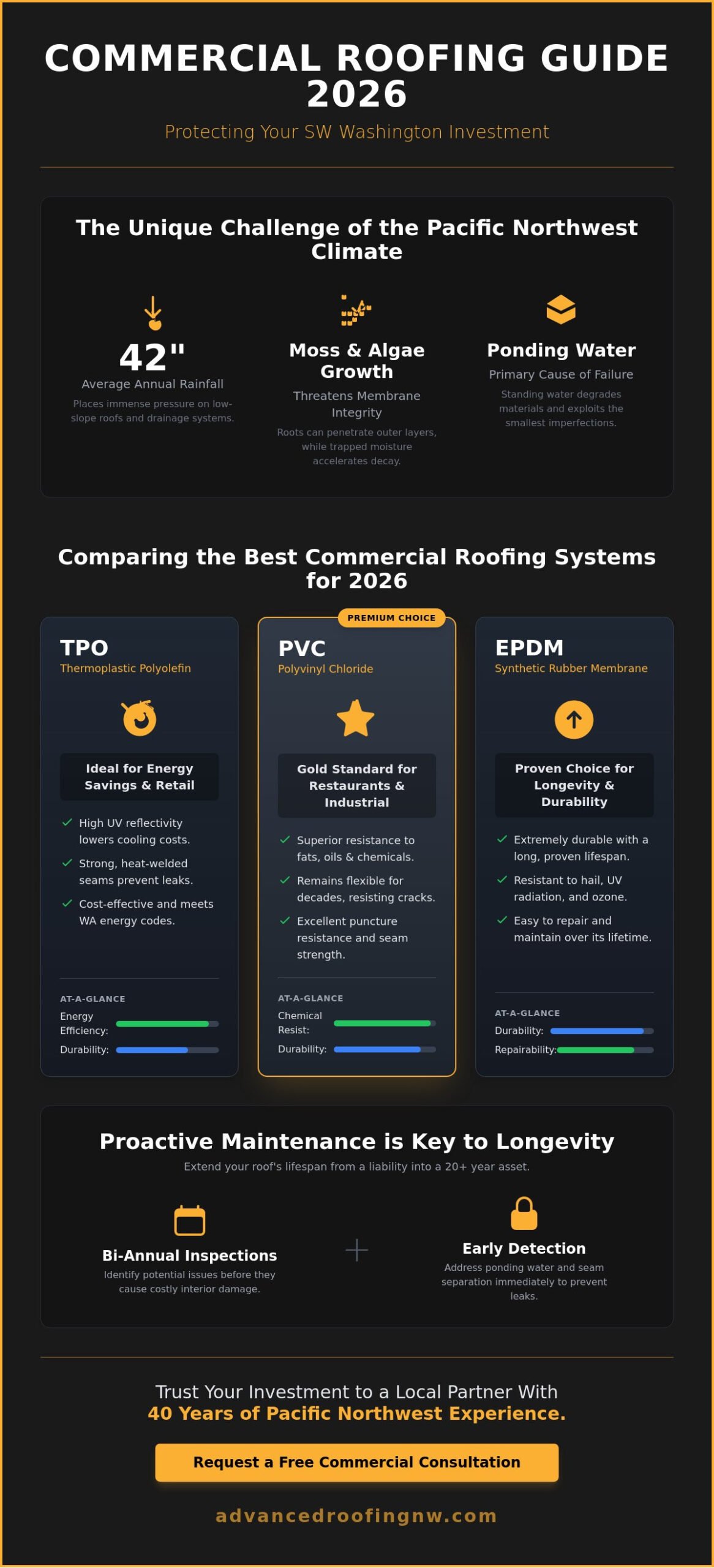
Vancouver receives an average of 42 inches of precipitation annually, which places immense pressure on commercial drainage designs. When 40+ inches of rain falls on a flat or low-slope surface, any imperfection in the pitch leads to standing water. This ponding water is a primary cause of premature failure in Membrane roofing systems like TPO or PVC. Constant moisture also invites moss and algae, which are non-negotiable threats in our region. Moss acts like a sponge, holding water against the roof surface, and roots can eventually penetrate the outer layers. We prioritize proactive moss treatment and clear drainage paths to prevent these issues from compromising your structure.
Commercial vs. Residential Roofing: Key Differences
The most visible difference between these systems is the slope. Residential properties typically use steep-slope designs that rely on gravity to shed water. In contrast, commercial roofing focuses on low-slope or flat surfaces that require specialized materials to remain watertight. The scale of these projects also demands different structural considerations. Commercial buildings often house heavy HVAC units, industrial vents, and communication equipment on the roof. This requires a contractor who understands how to flash around complex penetrations without creating leak points. If you’re researching options for a local house, see our roof replacement in Vancouver, WA guide for residential comparisons. Our team treats every commercial project with the same care we’d give a neighbor’s home, ensuring your business stays dry through every storm.
Choosing the right system involves more than just picking a material. It requires a partner who understands the specific wind loads and humidity levels of the Pacific Northwest. By focusing on durability and proper installation techniques, we help Clark County property owners avoid the frequent repairs that plague poorly managed systems. We believe in doing the job right the first time to provide the peace of mind you deserve.
Comparing the Best Commercial Roofing Systems for 2026
Choosing the right material for your commercial roofing project in Vancouver requires a balance of local weather knowledge and long-term performance data. As we head into 2026, property owners face stricter energy requirements and more volatile weather patterns. Selecting a system that stands up to the 40 inches of annual rainfall in the Northwest is the first step toward protecting your investment.
TPO vs. PVC: The Battle for the Flat Roof
TPO (Thermoplastic Polyolefin) remains a top choice for its high reflectivity. It helps buildings stay cool by bouncing UV rays away from the structure, which is critical for meeting Washington commercial roofing codes that prioritize energy efficiency in new constructions. Both TPO and PVC use heat-welded seams. These seams create a physical bond that is actually stronger than the membrane itself, providing superior leak protection during our heavy November rains.
While TPO is excellent for retail centers, PVC (Polyvinyl Chloride) is the gold standard for food service and industrial sites. It resists fats, oils, and chemicals that vent from restaurant kitchens. If your building houses a commercial kitchen or manufacturing facility, PVC prevents the membrane degradation that often plagues other materials. It stays flexible for decades, ensuring your facility remains dry even under harsh conditions.
EPDM and Built-Up Roofing (BUR)
EPDM is a synthetic rubber membrane known for its 30-year lifespan. It handles temperature fluctuations well, stretching and contracting without cracking as the seasons change. For large-scale warehouses over 40,000 square feet, it offers a cost-effective solution that stays flexible even in freezing temperatures. We often recommend EPDM for its ease of repair and proven track record in the Pacific Northwest.
Built-Up Roofing (BUR) provides multi-layer protection for those who prefer traditional asphaltic systems. These systems use alternating layers of bitumen and reinforced fabric, finished with a gravel top layer. This redundancy makes them incredibly durable against heavy foot traffic or falling debris. If you need a roof that can take a beating from HVAC technicians and maintenance crews, BUR is a time-tested option. You can always request a professional assessment to see which system fits your specific building footprint.
Metal roofing serves a specific niche for steep-slope commercial designs. In the Northwest, standing seam metal roofs are prized for their 50-year longevity and modern aesthetic. They shed snow and rain effortlessly, which prevents the moisture buildup common in our damp climate. While the initial investment is higher, the lack of maintenance makes it a smart choice for property owners looking at a 40-year horizon.
Commercial Roof Maintenance: Extending Lifespan in a Damp Climate
Vancouver averages 42 inches of rain annually, but microclimates in Ridgefield and Camas often see even higher moisture levels due to elevation and heavy tree cover. This constant dampness makes bi-annual inspections essential for every commercial roofing system. We recommend scheduling these reviews in early spring and late fall. Spring inspections identify winter storm damage, while fall visits ensure your drainage is clear before the heavy November rains arrive. Routine checks provide the peace of mind that your assets stay dry through the toughest Northwest seasons.
Flat roofs face specific challenges in our region. We frequently identify three primary failures during routine walks: ponding water, blistering, and seam separation. Standing water that remains 48 hours after a storm can degrade membranes and add thousands of pounds of weight to your building’s frame. Blisters occur when moisture gets trapped between layers, expanding as temperatures fluctuate. Seam separation is often the silent killer of TPO and EPDM roofs. It allows water to reach the insulation long before a visible leak appears inside your warehouse or office.
Clearing gutters and primary drains prevents catastrophic structural damage. A single blocked four-inch drain can cause hundreds of gallons of water to back up. This adds immense pressure to the roof deck and can lead to sudden deck failure. Our team ensures that every scupper, drain, and downspout stays clear to keep water moving off your building and away from the foundation.
Moss and Algae Mitigation
The heavy shade and consistent humidity in Clark County create a perfect breeding ground for biological growth. Moss acts like a sponge, holding moisture against the roof surface. These roots can eventually penetrate the membrane and cause microscopic tears. We use soft-wash methods and biodegradable treatments specifically formulated for commercial membranes. These techniques effectively kill spores without voiding your manufacturer warranty or damaging the integrity of the material. It’s a proactive step that maintains the reflective properties of your roof and prevents premature degradation.
The ROI of Preventative Maintenance
The financial logic of maintenance is clear. A $1,000 professional inspection and minor tune-up can often prevent a premature $50,000 roof replacement. Regular maintenance typically extends the life of a commercial system by 25% to 30%, pushing a standard 20-year roof toward a 26-year lifespan. Beyond the immediate savings, we provide detailed documentation for every visit. This paper trail is vital for insurance claims after wind storms and adds tangible value during property appraisals. If you manage smaller structures or outbuildings, you might also want to learn about gable roof designs that naturally shed the heavy Northwest rain.
Navigating Local Codes and Hiring Vancouver Commercial Roofers
Success in commercial roofing depends on more than just high-quality materials. It requires a deep understanding of the regulatory landscape in SW Washington. Washington State recently updated its building codes, with the 2021 Washington State Energy Code (WSEC) taking full effect in July 2024. These updates mandate specific R-values for roof insulation that directly impact your building’s energy efficiency and operational costs. We ensure every project meets these rigorous standards to protect your investment for the long haul.
Vancouver and Clark County Permit Requirements
The City of Vancouver Community Development department maintains strict oversight on all commercial structures. If your property sits in a dense urban area like Camas or downtown Vancouver, fire code requirements often dictate a Class A fire-rated roof assembly. Our team coordinates directly with local officials to secure necessary permits before work begins. We also manage the environmental regulations for tear-off disposal. Since 2023, Clark County has tightened rules regarding the recycling of roofing membranes and asphalt; we handle all the logistics to keep your business compliant with local environmental laws.
Vetting Your Roofing Partner
Hiring a local expert is the best way to avoid the risks associated with out-of-towners who travel from other states after a major weather event. These companies often lack the specialized knowledge of the Northwest’s unique dampness and wind patterns. A contractor with 40 years of history in Vancouver understands how our specific climate affects sealants and flashing over decades, not just months. When you interview potential partners, ask for references from at least three Vancouver-based businesses that have had their roofs for over five years. This proves the workmanship can withstand our persistent rain.
Before signing a contract, verify these essential credentials to ensure you aren’t left vulnerable to liability or repair costs:
- High-Limit Insurance: Ensure the contractor carries at least $2 million in general liability insurance to protect your property and assets.
- Manufacturer Certifications: Only certified installers can offer NDL (No Dollar Limit) warranties, which cover the total cost of labor and materials if a failure occurs during the warranty period.
- Washington State Bond: Confirm they are fully bonded and licensed specifically in Washington, as Oregon requirements differ significantly.
Our family-owned business treats your commercial property with the same care we would give our own homes. We focus on building long-term relationships through transparency and master craftsmanship. We don’t use high-pressure tactics; we provide the facts you need to make an informed decision for your business. If you’re ready to secure a roof that stands up to the Northwest weather, reach out for a professional consultation.
Advanced Roofing: Your Trusted Partner for Commercial Protection
Advanced Roofing NW has protected the Vancouver and SW Washington skyline since 1986. For 40 years, our family-owned team has stood as a reliable neighbor to local property owners. We understand that commercial roofing is not just a construction task; it is a long-term investment in the safety of your employees and the continuity of your business operations. Our legacy is built on the stability we provide to the community, ensuring that every warehouse, retail center, and office complex we touch can withstand the heavy rainfall and dampness typical of our Northwest climate.
We provide a comprehensive suite of services that covers the entire lifecycle of your building. Whether you are planning a new construction project for 2026 or need a rigorous routine maintenance plan to extend the life of an aging system, our master craftsmen deliver quality you can trust. We select premium materials specifically engineered for durability in the Pacific Northwest. Our goal is to offer peace of mind through superior workmanship and an unwavering commitment to integrity.
Our Commercial Process
Precision defines our approach to every project. We do not rely on surface-level visual checks. Instead, our technicians perform detailed on-site core cuts to analyze the underlying layers of your roof assembly. We integrate thermal imaging inspections to detect trapped moisture that is invisible to the naked eye. This data-driven method allows us to create customized proposals tailored to your building’s specific usage and structural needs.
- Core Analysis: We verify insulation integrity and deck conditions before recommending a replacement.
- Thermal Imaging: Our team identifies heat loss and moisture intrusion points to prevent mold and structural rot.
- Minimal Disruption: We implement specialized installation strategies that allow your business to remain fully active during the project.
Schedule Your Free Estimate
Transparency is the cornerstone of our relationship with the Vancouver community. When you request a quote for 2026, you receive a clear, line-item breakdown of costs. We eliminate the stress of high-pressure sales tactics and hidden fees. You will have direct access to our family-owned leadership team, ensuring that your questions are answered by experts who have a personal stake in your satisfaction.
We treat every commercial project with the same level of care and thoroughness we would apply to our own property. Our professional consultation process is designed to be helpful and informative, providing you with a logical path forward for your facility. Don’t leave your property’s protection to chance. Secure your investment with a team that has seen every challenge the Northwest weather can offer.
Get your free commercial roofing estimate from Advanced Roofing today!
Secure Your Vancouver Investment for 2026 and Beyond
Selecting the right materials for your commercial roofing project ensures your property withstands the specific dampness of Southwest Washington. You now understand how modern systems like TPO and EPDM provide durability while proactive maintenance plans help you avoid costly structural damage. Success in the Pacific Northwest climate depends on choosing high-performance solutions that meet strict 2026 local building codes.
Advanced Roofing NW brings over 40 years of local service to every job site in Vancouver. We’re a family-owned and operated company that’s been protecting local businesses since 1980. Because we’re fully licensed, bonded, and insured in Washington, you can rest easy knowing your project is handled with professional integrity. We take pride in our workmanship and treat your facility with the care it deserves. Our team is ready to help you navigate technical details and find the best fit for your building type.
Protect your property with a free commercial roofing estimate
We look forward to helping you build a safer, more resilient future for your business in our community.
Frequently Asked Questions
How long does a commercial roof typically last in Vancouver, WA?
A commercial roof in Vancouver typically lasts between 20 and 30 years depending on the chosen material. TPO and PVC systems generally reach the 25 year mark, while standing seam metal roofs often exceed 50 years of service. Our Northwest rain patterns mean these lifespans depend heavily on proper drainage and annual maintenance. We focus on durable commercial roofing solutions that withstand the 42 inches of rain our region receives annually.
What is the most common commercial roofing material used in the PNW?
TPO (Thermoplastic Polyolefin) is the most common material for flat roofs in the Pacific Northwest, accounting for over 50% of regional installations. Property owners prefer it because the heat-welded seams provide a waterproof barrier against our constant winter drizzle. It reflects UV rays effectively, which helps buildings stay cool during our increasingly hot July and August months. This material offers a balance of cost-effectiveness and leak protection for our local climate.
Can I install a new commercial roof over an existing one to save money?
You can install a new roof over an existing one if the building currently has only one layer of roofing. International Building Code Section 1511 limits commercial structures to two total layers to prevent excessive weight on the deck. We perform core samples to ensure the original insulation is dry before recommending a recovery. If moisture levels in the substrate exceed 20%, a full tear-off is necessary to prevent structural rot and protect your investment.
How often should I have my commercial roof inspected in SW Washington?
You should schedule commercial roofing inspections twice per year to keep your warranty valid and catch minor leaks early. We recommend one visit in the spring to check for winter storm damage and another in the fall to clear debris before the November rains begin. Regular check-ups prevent the 70% of premature roof failures that occur due to simple neglect or clogged internal drains. It’s a small step that ensures long-term peace of mind.
What are “Cool Roofs” and are they required in Washington state?
Cool roofs are systems designed to reflect more sunlight and absorb less heat than standard materials. The Washington State Energy Code (WAC 51-11C) mandates high-reflectance surfaces for many new commercial buildings and major retrofits in Vancouver. These systems can reduce roof surface temperatures by up to 50 degrees during a summer heatwave. This change lowers your monthly cooling costs and extends the life of your HVAC equipment by reducing its daily workload.
How long does a typical commercial roof replacement take for a retail building?
A typical replacement for a 10,000 square foot retail building takes between 7 and 12 business days. This timeline includes the removal of old materials, any necessary deck repairs, and the installation of the new membrane. We work in sections to keep your business dry and operational throughout the entire process. Our crews prioritize safety and clear communication so your customers aren’t inconvenienced while we work to protect your property.
What is an NDL warranty and why do I need one for my commercial property?
An NDL warranty stands for No Dollar Limit and covers the full cost of labor and materials for repairs regardless of the original price. Unlike pro-rated warranties, an NDL policy ensures the manufacturer pays 100% of the repair costs for the duration of the term, which is usually 15 to 30 years. This provides essential financial protection for Vancouver property owners. It’s the best way to avoid unexpected capital expenditures if a manufacturing or installation defect occurs.
Does my commercial insurance cover roof repairs after a PNW windstorm?
Most commercial insurance policies cover roof repairs caused by sudden and accidental events like wind gusts over 50 mph or fallen Douglas fir limbs. However, they rarely cover leaks caused by general wear or lack of maintenance over several years. We recommend reviewing your policy’s windstorm deductible, which often ranges from 1% to 5% of the building’s total value. Documenting your roof’s condition with annual photos helps ensure your claims are processed quickly after a storm.