
What should you do first when a storm leaves shingles scattered or a leak appears overhead? Before planning a replacement, document what you can see and understand how to file an insurance claim for roof damage wa homeowners may face, without assuming what their policy covers.
It’s natural to worry about missing important evidence or misunderstanding how an adjuster’s assessment relates to a roof replacement. A clear record of visible damage, related expenses, and conversations with your insurer can help you approach each step with greater confidence.
This guide explains how to document roof damage, start a claim, and prepare questions for your insurer. It also explains how a professional roof evaluation from Advanced Roofing can help document the roof’s condition, while leaving coverage decisions to your insurer. Once you understand that decision, you can consider whether replacement is the right next step for your Southwest Washington home.
Key Takeaways
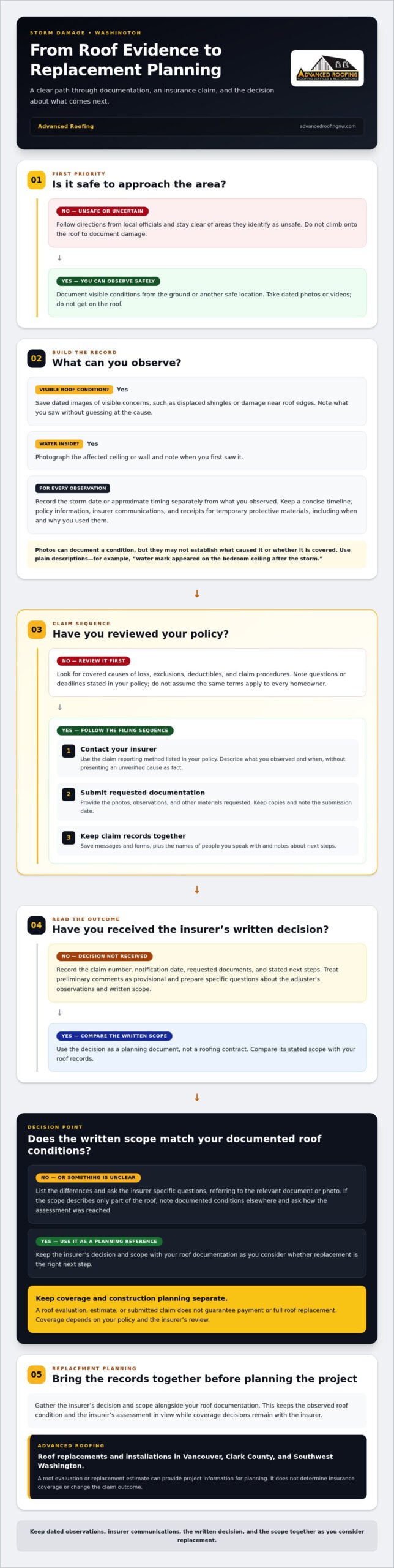
- For how to file an insurance claim for roof damage wa, use a clear sequence: review your policy, contact your insurer, submit requested documentation, and keep claim records together.
- Put safety first. Take dated photos and videos of visible damage from a safe location, and note what you observe.
- Read the insurer’s written decision and scope carefully. Record questions about differences between that assessment and the roof conditions you documented.
- Use the claim decision to guide replacement planning. A claim or estimate does not mean that coverage or a full replacement has been approved.
Roof Damage in Washington: What to Do Before Filing a Claim
Start with safety. Follow directions from local officials before approaching the home or inspecting the roof. Stay clear of areas they identify as unsafe, and don’t climb onto the roof to document damage. When considering how to file an insurance claim for roof damage wa, record what you can see without putting yourself at risk.
From the ground or another safe location, take dated photos and videos of visible concerns, such as displaced shingles or damage near roof edges. If you notice water inside, photograph the affected ceiling or wall and note when you first saw it. Record the storm date or approximate timing separately from your observations. Photos can document a condition, but they may not establish what caused it or whether it’s covered.
What roof-damage evidence should Washington homeowners gather?
Keep a concise timeline and one organized claim file. Label observations plainly. For example, “water mark appeared on the bedroom ceiling after the storm” is more useful than stating the cause as certain. Add your policy information and insurer communications as they become available. A general overview of Property insurance can introduce common terms, but your policy and the insurer’s review determine how your claim is assessed.
- Save dated images of visible roof conditions and interior water intrusion.
- Note when you observed each condition and what you saw, without guessing at the cause.
- Keep receipts for temporary protective materials, and record when and why you used them.
These records can help you explain the sequence of events clearly when you contact your insurer. Keep copies of everything together, including later messages and documents, so you can refer to the same information throughout the claim process.
How to File a Washington Roof-Damage Insurance Claim Step by Step
A clear sequence helps keep the claim organized, but it does not determine what your policy covers. To file an insurance claim for roof damage wa, begin with your policy, follow your insurer’s filing instructions, and keep a record of each step.
- Review your policy. Look for the sections on covered causes of loss, exclusions, deductibles, and claim procedures. Note any questions or deadlines stated in your policy instead of assuming the same terms apply to every homeowner.
- Contact your insurer. Use the claim reporting method listed in your policy. Describe what you observed and when, without presenting an unverified cause as fact.
- Submit requested documentation. Provide the photos, observations, and other materials your insurer requests. Keep copies of what you send and note the submission date.
- Save claim records. Keep messages and forms together, along with the names of people you speak with and notes about next steps.
Coverage depends on your policy and the insurer’s review. Visible damage, a roofing evaluation, or a submitted claim alone does not establish approval. A roof evaluation can describe the roof’s condition; the insurer decides how the policy applies to the claim.
What happens after you notify your Washington insurer?
Record the claim number, notification date, requested documents, and any stated next steps. Prepare specific questions about the adjuster’s observations and the written scope. Treat preliminary comments as provisional until you receive the insurer’s decision. For current consumer guidance or dispute information, consult the Washington State Office of the Insurance Commissioner.
If you need a clearer picture of the roof’s condition while considering next steps, Advanced Roofing can evaluate the roofing project and provide a roof replacement estimate. The estimate can help with replacement planning, but it does not determine insurance coverage.
After the Claim Decision: Plan a Roof Replacement in Southwest Washington
Once you receive the insurer’s written decision, use it as a planning document, not a roofing contract. Compare the stated scope with your roof records and note any areas that seem different or unclear. For example, if the insurer’s scope describes only part of the roof, list the documented conditions elsewhere and ask the insurer how it reached that assessment. Keep your questions specific and refer to the relevant document or photo.
An estimate, roof evaluation, or submitted claim does not guarantee payment or full roof replacement. The insurer’s decision is based on the policy and its review. Understanding what the decision addresses, and what it does not, can help you make a measured choice about next steps, including whether to plan for replacement.
How can homeowners prepare for a roof replacement after an insurance decision?
Gather the insurer’s decision and scope alongside your roof documentation before discussing project planning. This gives you a shared reference for the roof’s observed condition and the insurer’s assessment, while keeping coverage decisions separate from construction planning.
For homeowners in Vancouver, Clark County, and Southwest Washington, Advanced Roofing focuses on roof replacements and installations. The company can evaluate the roofing project and provide a Free Roof Replacement Estimate, giving you project information to consider after you understand the insurer’s decision. An estimate describes proposed roofing work; it does not change the claim outcome or mean insurance will pay for the project.
If you’re moving from a claim decision toward replacement planning, start with the documents that explain the roof’s condition and the insurer’s scope. An organized record can help you weigh your options and choose a practical path forward for your home.
Choose Your Next Step With Confidence
Once you understand the insurer’s decision, you can decide whether a roof replacement fits your home’s needs and your plans. Knowing how to file an insurance claim for roof damage wa can inform that decision, but the claim outcome and the roofing project remain separate considerations.
For homeowners in Vancouver, Battle Ground, Camas, Ridgefield, La Center, Longview, Kelso, Woodland, Castle Rock, and Kalama who are weighing replacement, Advanced Roofing is a family-owned and operated company serving customers since 1997. Fully licensed, bonded, and insured in Oregon and Washington, the company can provide a replacement estimate to help you understand the roofing work being considered.
Request a Free Roof Replacement Estimate and move forward with a clearer picture of your options. Review the proposed work alongside the insurer’s decision as you plan the next step for your home.
Frequently Asked Questions
Does homeowners insurance cover roof damage caused by a storm in Washington?
Storm-related roof damage may be covered, but coverage depends on the cause, your policy terms, exclusions, and the insurer’s review. A sudden wind event may be treated differently from gradual wear or maintenance-related deterioration. Review your policy and ask the insurer how it applies to the damage documented at your home before making replacement plans.
Should I file an insurance claim for minor roof damage?
Not automatically. First, review your policy’s deductible and claim provisions, then consider whether the documented damage appears to exceed the deductible. The insurer decides what the policy covers, so an estimate alone cannot establish that a claim will be paid. If you’re uncertain, ask your insurer how submitting a claim may affect your situation before deciding.
What should I do if my Washington roof insurance claim is denied?
Read the denial letter closely and compare its stated reasons with your policy and claim documents. Ask the insurer to explain unclear terms or how it assessed specific roof conditions, and keep its response with your records. For guidance on how to file an insurance claim for roof damage WA or respond to a decision, consult consumer information from the Washington State Office of the Insurance Commissioner.
Can I begin roof replacement before my insurance claim is resolved?
You can make that choice, but starting before the insurer completes its review could affect the evidence available or the way the loss is assessed. Ask the insurer whether it needs to examine the roof before work begins, and keep relevant records. For homeowners in Vancouver, Battle Ground, Camas, Ridgefield, La Center, Longview, Kelso, Woodland, Castle Rock, and Kalama, a pending claim does not guarantee payment or full replacement.