Could the quickest way to clear roof moss also shorten your roof’s life? In the Pacific Northwest, damp weather and shade can help moss return, but scraping or pressure washing can damage shingles. Climbing onto a slick roof can also put you at risk. If you’re learning how to deal with moss on roof in pacific northwest homes, start by protecting both the roof and yourself.
This guide explains how to assess moss from the ground, avoid removal methods that can damage roofing, and decide when a professional inspection makes sense. Moss can hold moisture against roofing materials and may lift shingles, but its presence alone doesn’t mean the roof needs replacement. An inspection from Advanced Roofing can help assess visible concerns when moss obscures the roof or you suspect damage.
Key Takeaways
- Shady, damp roof areas can encourage moss, but its presence alone doesn’t mean your roof needs replacement.
- To learn how to deal with moss on roof in pacific northwest homes, start with a ground-level assessment. Avoid high-pressure cleaning and unsafe roof access.
- Preventing regrowth means considering shade, debris, and recurring moisture, not just treating visible moss.
- Arrange a roof inspection if you notice leaks, disturbed shingles, widespread growth, or unsafe access. An inspection can help clarify whether repair or replacement merits consideration.
Why Roof Moss Grows in the Pacific Northwest, and What It Can Mean
Moss is a moisture-loving plant that can grow on roofing materials. In the Pacific Northwest, damp conditions and limited sunlight create favorable spots, especially on shaded roof slopes where moisture lingers. Moss can hold moisture against shingles and may contribute to lifting or wear. Treat it as a maintenance concern, not proof that the roof needs replacement.
To start figuring out how to deal with moss on roof in pacific northwest homes, assess what you can see safely from the ground. Note:
- Location: Is the growth concentrated on a shaded slope, or visible in several areas?
- Extent: Is moss limited to isolated patches, or does it cover a broad section?
- Debris: Are leaves or other material collecting on or near the affected area?
- Shingle condition: Do any shingles look lifted, shifted, or missing?
These observations can help you describe the issue, but they can’t confirm the condition beneath the roofing. Don’t climb up for a closer look if the surface may be slippery. Roof cleaning methods, including those for moss removal, are detailed on Wikipedia.
Does moss mean the roof is damaged?
Visible moss is a reason to assess the roof, not proof of confirmed damage. Moss can obscure shingles, and a ground-level view can’t reveal every issue. Water entering the home, interior water staining, lifted or displaced shingles, or exposed roof sheathing warrant a professional assessment. An inspection can help clarify the roof’s visible condition and whether further attention is needed.
How to Remove and Prevent Roof Moss Safely in the Pacific Northwest
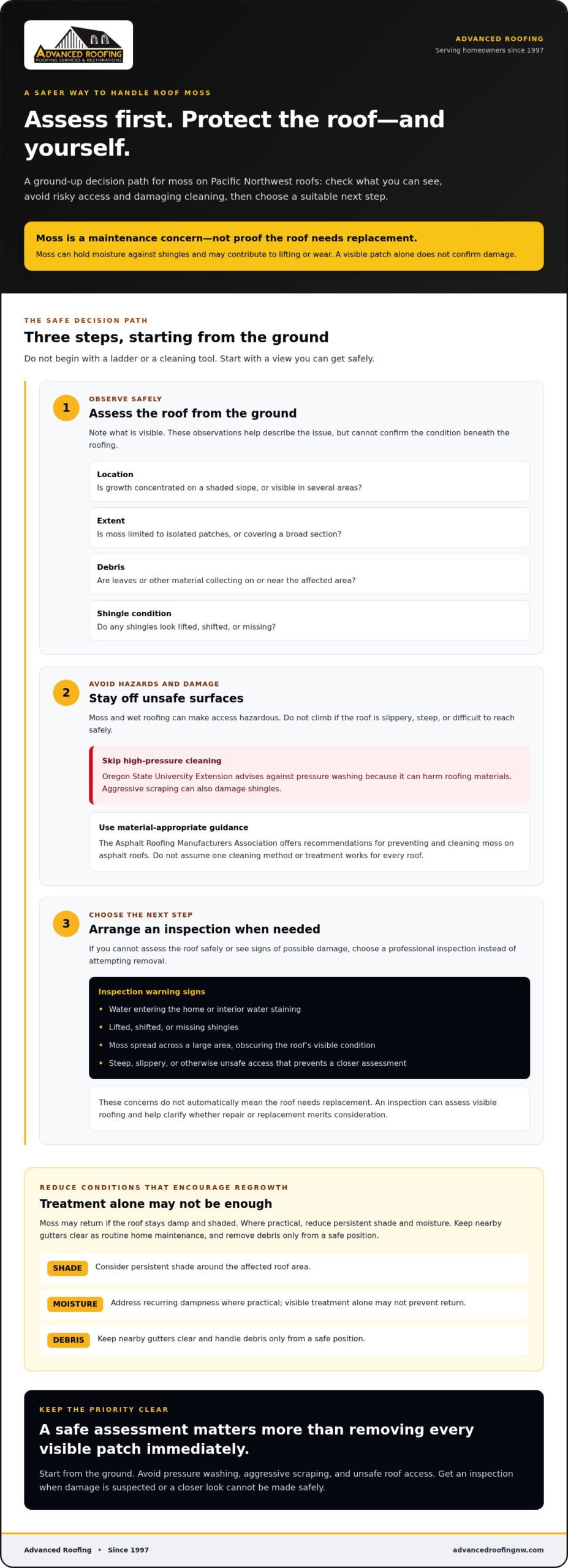
A safe plan starts with what you can assess from the ground, not with a ladder. If you’re considering how to deal with moss on roof in pacific northwest homes, use this decision path:
- Assess from the ground. Note where moss is growing, how widespread it appears, and whether shingles look lifted or disturbed.
- Stay off unsafe surfaces. Moss and wet roofing can make access hazardous. Don’t climb if the roof is slippery, steep, or difficult to reach safely.
- Choose a suitable next step. If you can’t assess the roof safely or see signs of damage, arrange a professional inspection rather than attempting removal.
Skip high-pressure cleaning. Oregon State University Extension advises against pressure washing because it can harm roofing materials. Aggressive scraping can also damage shingles. The Asphalt Roofing Manufacturers Association offers recommendations for preventing and cleaning moss on asphalt roofs. Follow guidance suited to your roofing material instead of assuming one cleaning method or treatment works for every roof.
Treatment alone may not prevent moss from returning if the roof remains damp and shaded. Where practical, reduce persistent shade and moisture. Keep nearby gutters clear as routine home maintenance so debris doesn’t add to moisture buildup. Remove debris only from a safe position.
When should you avoid removing moss yourself?
Don’t climb onto a roof when moss, rain, steepness, or difficult access makes footing uncertain. Avoid forceful scraping or unsuitable cleaning that could harm shingles. A safe assessment matters more than removing every visible patch immediately. If you’re concerned about the roof’s condition, a professional roof inspection can help you choose a careful next step.
When Pacific Northwest Roof Moss Calls for a Professional Inspection
Moss can make it harder to judge the roofing beneath it. Arrange a professional inspection if you notice possible signs of a problem or if getting a closer look would require unsafe access. Watch for:
- Signs of a leak, such as water entering the home or interior water staining.
- Shingles that appear lifted, shifted, or missing.
- Moss spread across a large area, obscuring the roof’s visible condition.
- Steep, slippery, or otherwise unsafe roof access that prevents a closer assessment.
These concerns don’t automatically mean the roof needs replacement. An inspection can assess visible roofing and help identify whether repair or replacement merits consideration. That’s a useful next step when deciding how to deal with moss on roof in pacific northwest homes without guessing about what may be happening underneath.
What can a roof inspection help clarify?
A roof inspection can assess visible shingles and surrounding roofing for apparent damage or other concerns. It can also help determine whether moss makes it difficult to evaluate the roof from the ground and whether further attention may be warranted. The findings give you a clearer basis for deciding what to do next.
Advanced Roofing provides roof inspections and repair for homeowners in Vancouver, Battle Ground, Camas, Ridgefield, La Center, Longview, Kelso, Woodland, Castle Rock, and Kalama. If moss, a suspected leak, or disturbed shingles have you concerned, a professional assessment can help you make a more informed decision about protecting your home.
Protect Your Roof with a Safe, Informed Next Step
In the Pacific Northwest, damp shade can encourage moss, but its presence alone doesn’t prove your roof needs replacing. Assess growth from the ground, avoid high-pressure cleaning and risky roof access, and pay attention to leaks or visibly disturbed shingles. These signs can help you decide whether a professional inspection is the safer next step.
Advanced Roofing is a family-owned and operated roofing contractor serving the area since 1997. Fully licensed, bonded, and insured in Oregon and Washington, the team provides roof inspections and repair across Vancouver, Battle Ground, Camas, Ridgefield, La Center, Longview, Kelso, Woodland, Castle Rock, and Kalama. If moss or possible damage has you concerned, contact Advanced Roofing to arrange a roof inspection.
Frequently Asked Questions
Can I remove moss from my roof myself?
You can assess limited moss growth from the ground, but removal isn’t worth climbing onto a slippery or steep roof. A safe approach to how to deal with moss on roof in pacific northwest homes starts by checking visible growth and shingle changes from a stable spot. Avoid aggressive scraping. If you can’t work safely, leave roof access and assessment to a professional.
Is pressure washing safe for removing roof moss?
No. Pressure washing can damage roofing materials. Oregon State University Extension advises against high-pressure cleaning for roof moss. Don’t try to compensate with forceful scrubbing or scraping, which can also harm shingles. Choose an approach suited to the roofing material, or arrange an inspection if moss covers a broad area or access feels unsafe.
How can I prevent moss from growing back on my roof?
Reduce conditions that encourage regrowth where practical. Manage nearby overhanging branches that create persistent shade, and keep gutters clear as routine home maintenance. Remove debris only from a safe position. Treatments may address existing moss, but chemicals alone won’t prevent its return if the roof remains damp and shaded. Reassess visible growth from the ground periodically.
When should I call a roofer about moss on my roof?
Call a roofer if you suspect a leak, see lifted or displaced shingles, notice widespread moss that hides the roof’s condition, or can’t inspect safely. A roof inspection can assess visible roofing and help determine whether repair or replacement merits consideration. Advanced Roofing provides roof inspections and repair in Vancouver, Battle Ground, Camas, Ridgefield, La Center, Longview, Kelso, Woodland, Castle Rock, and Kalama.