In the Pacific Northwest, a “good deal” on a new roof can quickly become the most expensive mistake you ever make. When the clouds gather over Vancouver or Portland, your roof is the only thing standing between your family and the relentless rain. It’s completely normal to feel a sense of dread when you’re faced with high-pressure sales tactics or confusing paperwork about licensing and insurance. You deserve to feel confident that your investment is being handled by a neighbor who cares about the community as much as you do.
Identifying the red flags when hiring a roofing contractor is the best way to protect your home and your wallet from poor workmanship. We’ve seen how stressful it can be to navigate the differences between Washington’s Department of Labor & Industries and Oregon’s Construction Contractors Board requirements. This guide will teach you how to spot dishonest practices and verify a professional’s credentials before any shingles are laid. We’ll cover the warning signs of “storm chasers” and the essential documents you need to see to ensure your roof survives the next rainy season without a single leak.
Key Takeaways
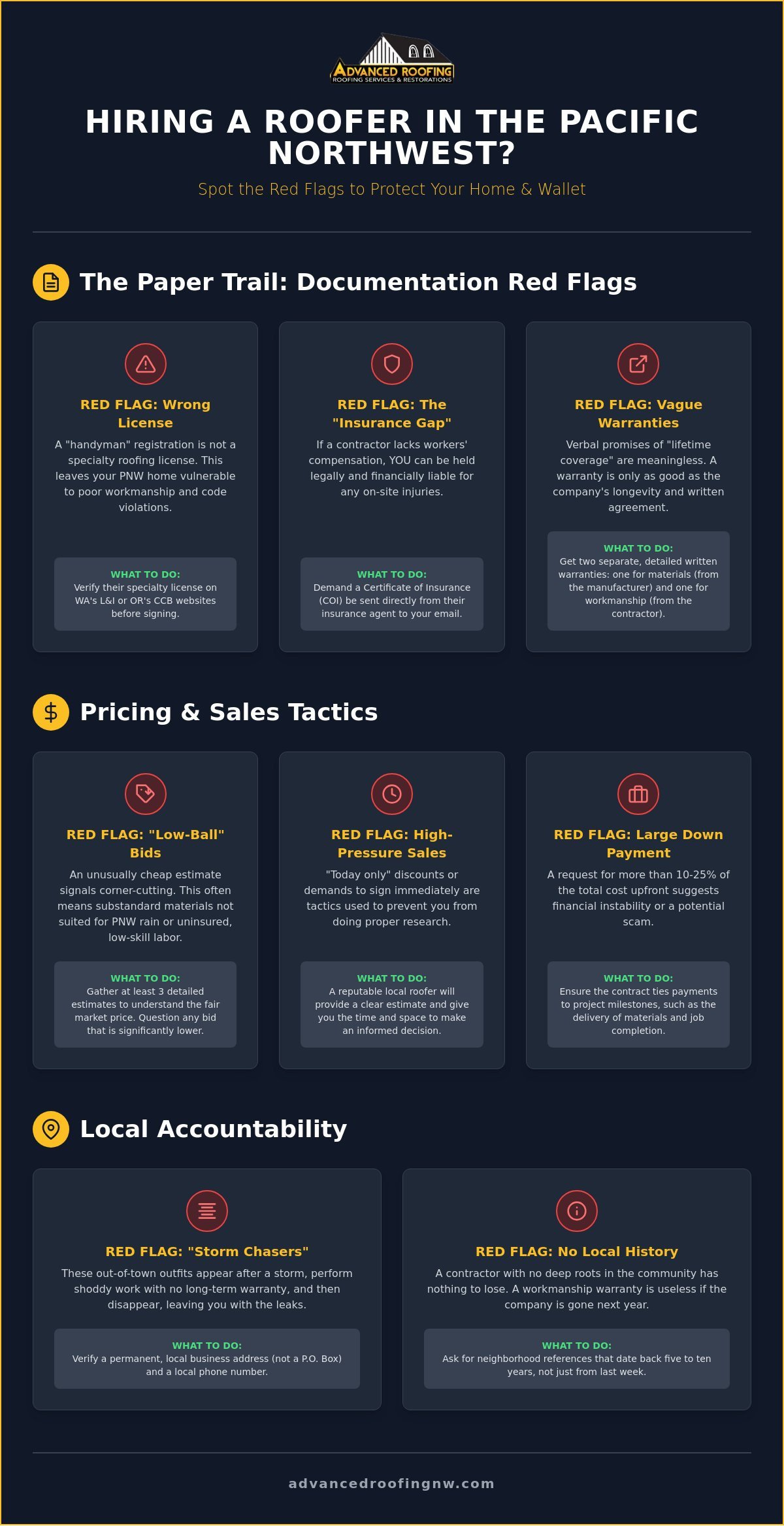
- Learn why a specialty roofing license is non-negotiable and how a basic handyman registration leaves your PNW home vulnerable to poor workmanship.
- Identify common red flags when hiring a roofing contractor, including “low-ball” bids that often signal the use of substandard materials or uninsured labor.
- Understand the “insurance gap” and how you can be held legally liable for on-site injuries if your contractor lacks proper workers’ compensation.
- Discover how to spot “storm chasers” by verifying permanent local addresses and checking for neighborhood references that date back five to ten years.
- Find out why reputable local experts avoid high-pressure sales tactics and how a professional estimate should provide clarity rather than confusion.
The Paper Trail: Documentation Red Flags That Put You at Risk
A professional roofing project begins long before the first shingle is removed. It starts with a clear, verifiable paper trail that protects your home and your bank account. One of the most significant red flags when hiring a roofing contractor is a reluctance to provide specific, written documentation. In the Pacific Northwest, where rain and wind demand precise craftsmanship, relying on a verbal agreement is a gamble you don’t need to take. This standard of transparency is shared by established professionals like Oxford Driveways And Roofing Ltd., who emphasize clear communication and documented service quality.
Understanding what a roofer does involves more than just physical labor; it includes managing legal and financial protections for the homeowner. A common trap is hiring someone with a general handyman license. While they might be skilled at minor repairs, they often lack the specialty registration required for a full roof replacement. This distinction is vital because specialty contractors carry higher bonds and specific insurance that a general handyman does not. If they lack workers’ compensation, you become the “employer” in the eyes of the law, making you liable for any on-site injuries. This insurance gap is a massive liability that reputable local neighbors will always help you avoid.
Verifying Licensing and Insurance in the PNW
Protect your investment by doing a quick background check before signing anything. In Washington, use the Department of Labor & Industries (L&I) website to verify their specialty license and bond status. In Oregon, the Construction Contractors Board (CCB) provides similar transparency. Don’t just look at a photocopied paper. Ask for a current Certificate of Insurance (COI) sent directly from their insurance agent to your email. This ensures the policy is active and hasn’t lapsed due to missed payments.
The Danger of Unwritten Warranties
Vague promises of “lifetime coverage” are another red flag when hiring a roofing contractor. You need to distinguish between a manufacturer’s material warranty, which covers shingle defects, and a contractor’s workmanship warranty, which covers installation errors. A warranty is only as good as the company’s longevity in the community. Without a written agreement detailing both, you may find yourself paying out of pocket for leaks caused by poor flashing or improper underlayment installation. Always insist on a detailed scope of work that names every material being used on your roof.
Pricing and Sales Tactics: When the Deal is Too Good to Be True
One of the most common red flags when hiring a roofing contractor is an estimate that comes in significantly lower than the others. While saving money is always a priority, a “low-ball” bid usually suggests a contractor is cutting corners on labor or using materials that aren’t designed for our damp climate. In the Northwest, your roof faces constant moisture and wind. Using high-quality architectural asphalt shingles is essential for long-term protection. When labor is cheap, critical steps like installing proper ventilation on a gable roof are often skipped; this leads to trapped heat and mold growth in your attic.
Why Quality Materials Cost More in the Northwest
Cheap materials simply don’t hold up against the heavy rain and seasonal wind we experience in the Vancouver and Portland areas. A cut-rate contractor might save money by using thin underlayment or generic flashing, but these choices often result in leaks within just a few years. Investing in durable components ensures your home stays dry through the roughest winter months. If you are comparing quotes, speaking with a professional neighbor who understands local building codes can help you spot where a competitor might be skimping on quality.
Spotting High-Pressure Sales Techniques
Sales tactics can also reveal a lot about a company’s character. If a door knocker tells you they have a “today only” discount or pressures you to sign a contract immediately after a storm, walk away. Reputable local roofers give you the time and space to review your options. We recommend gathering at least three new roof estimates to understand the fair market value for your project. High-pressure urgency is a classic sign of a potential home improvement scam designed to stop you from doing your research.
Financial red flags are equally telling. Be wary if a contractor asks for more than 10 to 25 percent of the total cost before any materials arrive. A professional business should have the stability to start your project without a massive upfront deposit. This level of professional integrity is something we share with other high-quality service providers, such as Christensen Heating and Cooling, who prioritize transparent and honest business practices. Finally, never trust a roofer who offers to “waive” your insurance deductible. This practice is a form of insurance fraud that puts you at legal risk. Integrity matters, and a contractor who is willing to cheat an insurance company is likely willing to cut corners on your home’s protection too.
Local Accountability: Storm Chasers vs. The Trusted Northwest Neighbor
Spotting red flags when hiring a roofing contractor is often as simple as looking at the truck parked in your driveway. After a major windstorm or heavy rain event in the Vancouver and Portland area, “storm chasers” often flood our neighborhoods. These companies travel from state to state following bad weather. They use unmarked white vans, out-of-state license plates, and generic business cards that lack a permanent physical address. If a contractor can’t show you a local office where you can find them next year, they’re likely a temporary operation. They often disappear once the rainy season ends, which leaves you with no one to call if your new roof starts leaking in January.
Accountability is the foundation of a good contractor-homeowner relationship. A major warning sign is a total lack of local references. A reputable roofer should easily point to a home they worked on in your specific neighborhood five or ten years ago. This longevity proves their workmanship survives the Northwest climate. Learning how to spot a home improvement scam involves checking for these deep community roots. If they only have reviews from three states away, they aren’t the local experts you need to protect your investment.
The Value of a Multi-Generational Local Roofer
Experience matters when dealing with our unique weather patterns. A company with 40+ years of local service understands exactly how moss, dampness, and wind affect a structure over time. This specialized knowledge is vital for high-quality roof repair in Vancouver, WA. At Advanced Roofing, we’ve been family-owned and operated since 1980. We treat every project like it’s our own home because we live in the same community as our customers. Use the “neighbor test” by asking if the contractor is active in local trade associations or community groups.
How to Vet a Roofer’s Local Reputation
Don’t just take a salesman’s word for it. Check the Better Business Bureau (BBB) to see how they handle complaints. A company that has been around for decades will inevitably have a few hiccups, but a professional neighbor will have a clear history of resolving those issues fairly. Look for recent reviews from homeowners in cities like Camas, Ridgefield, and Battle Ground. Consistent, positive feedback from people in your own zip code is the best way to avoid the red flags when hiring a roofing contractor and ensure you’re working with someone who stands behind their craftsmanship.
Secure Your Home’s Future with a Partner You Can Trust
Protecting your PNW home requires vigilance and a clear understanding of industry standards. By keeping an eye out for the red flags when hiring a roofing contractor, you ensure that your investment is handled with the care it deserves. Whether it’s verifying a specialty license or resisting high-pressure sales tactics, these steps are the foundation of a successful project that stands up to our local weather. You deserve a roof that provides peace of mind through every season.
At Advanced Roofing, we bring over 40 years of local stability to every project we undertake. We are a family-owned business, fully licensed, bonded, and insured in both Washington and Oregon. Our goal is to provide the same level of protection for your family that we would want for our own. We focus on long-term value and master craftsmanship rather than quick transactions or high-pressure pitches.
Get a Free, No-Pressure Estimate from Advanced Roofing Today
We look forward to being the reliable neighbor you can count on for your next residential or commercial project. Reach out today to experience the peace of mind that comes with working with a trusted local expert who stands by their work.
Frequently Asked Questions
Is it a red flag if a roofer asks for the full payment upfront?
Yes, demanding 100% of the project cost before any work begins is a major warning sign. A reputable contractor typically requests a deposit between 10% and 25% to secure materials and a spot on the schedule. Paying the full amount upfront leaves you with no leverage if the workmanship is substandard or if the crew fails to show up to complete the job.
How can I tell if a roofing contractor is actually local to Vancouver or Portland?
Check for a permanent physical office address rather than a P.O. Box or a temporary storage unit. A truly local neighbor will have vehicles with Washington or Oregon license plates and a deep portfolio of completed projects in communities like Camas, Ridgefield, and Battle Ground. You should also verify that their license and bond are active with the Washington Department of Labor & Industries or the Oregon Construction Contractors Board.
What should I do if a roofer knocks on my door after a windstorm?
Be extremely cautious and avoid signing any documents or “inspection authorizations” on the spot. High-pressure door knocking is one of the most common red flags when hiring a roofing contractor, as these individuals are often “storm chasers” from out of state. Instead of agreeing to an immediate roof inspection, ask for their local business card and take the time to research their reputation and insurance coverage independently.
Is a low estimate always a bad sign for a roof replacement?
A bid that is significantly lower than others usually indicates that a contractor is cutting corners to save money. This might mean they are using generic shingles, skipping essential moss-resistant treatments, or failing to pay for workers’ compensation insurance. While it’s tempting to choose the cheapest option, you often end up paying more in the long run for repairs when a cut-rate roof fails during a heavy Northwest rainy season.