Last October, a homeowner in Salmon Creek watched as a simple scheduling delay left their unfinished plywood decking exposed to three straight days of Vancouver rain. It is a stressful scenario that underscores why timing and expertise are everything in our local climate. You likely understand that building a home in the Pacific Northwest requires a different level of care than in drier regions. Between the 42 inches of annual rainfall we see here in Vancouver and the constant threat of moss growth, the stakes for your new roof construction project are incredibly high.
We believe you deserve a home that remains dry and secure for decades, not just until the next storm cycle. This guide will help you master the entire process, ensuring you choose materials with a 30 year lifespan and coordinate seamlessly with your general contractor to avoid costly weather-related setbacks. We will walk through every essential step, from reviewing initial blueprints to passing your final building code inspection with total confidence. You can protect your investment and achieve a leak-proof result that stands up to the unique challenges of our Northwest environment.
Key Takeaways
- Learn how the planning phase secures your home’s structural integrity against the unique moisture and humidity challenges of the Pacific Northwest.
- Master the 5-step process for new roof construction to ensure a seamless transition from a bare frame to a fully protected, weather-tight system.
- Discover which specific roofing materials resist premature failure in our local climate, ensuring your investment lasts for decades to come.
- Gain actionable advice on coordinating framing and roofing teams to maintain a smooth project timeline and a safe, prepared job site.
- Understand the value of partnering with a local, family-owned expert to navigate Vancouver building codes with the care your new home deserves.
Planning Your New Roof Construction in Vancouver and Clark County
Starting a building project in the Pacific Northwest requires a strategy that accounts for our unique climate. In the industry, new roof construction refers to the installation of a complete roofing system on a freshly framed structure. This process differs significantly from a simple replacement because it involves building from the rafters up, ensuring every layer integrates perfectly with the new home’s architecture. For homeowners in Vancouver, Washington, this planning phase is the most critical step for long-term structural integrity. A well-designed plan prevents moisture intrusion and ensures the roof can withstand the 40-plus inches of annual rainfall common in Clark County.
Success begins by aligning architectural blueprints with the 2021 Washington State Building Code. These regulations dictate everything from ventilation requirements to fire resistance ratings. Getting this right during the design phase saves time and prevents costly mid-project corrections. Timing also plays a vital role in the Pacific Northwest. While we work year-round, July through September represents the golden window for new roof construction in our region. These dry months allow crews to seal the structure quickly, protecting the interior framing from the damp conditions that often arrive by mid-October.
Understanding Local Building Codes and Permits
Navigating the permit process in Clark County and the City of Vancouver is a task we handle to ensure your project stays on schedule. Local codes are particularly strict regarding load-bearing requirements. Because Vancouver sits at the mouth of the Columbia River Gorge, roofs must be engineered to handle specific snow loads and wind speeds that can reach 100 mph during winter events. Your roofing contractor acts as a bridge between the job site and the city, securing the necessary permits and scheduling the final inspections required to close out your building permit. This professional oversight ensures your home meets all safety standards from day one.
The Anatomy of a New Construction Roof System
A reliable roof is much more than just a layer of shingles. It is a complex assembly designed to shed water and manage airflow. A standard Domestic roof construction project includes several layers that must work in harmony. Using a “system” approach, where all components come from a single manufacturer, provides superior protection and better warranty coverage than mixing and matching piece-meal materials.
- Underlayment: A water-resistant or waterproof barrier installed directly onto the deck.
- Flashing: Metal pieces that redirect water away from chimneys, dormers, and valleys.
- Ventilation: A balance of intake and exhaust vents that prevent heat and moisture buildup in the attic.
The roof deck serves as the essential foundation of the entire system, providing the structural surface that supports all other materials. By focusing on these core components during the planning stage, you ensure your new home remains dry, energy-efficient, and secure for decades to come.
The 5-Step New Roof Installation Process
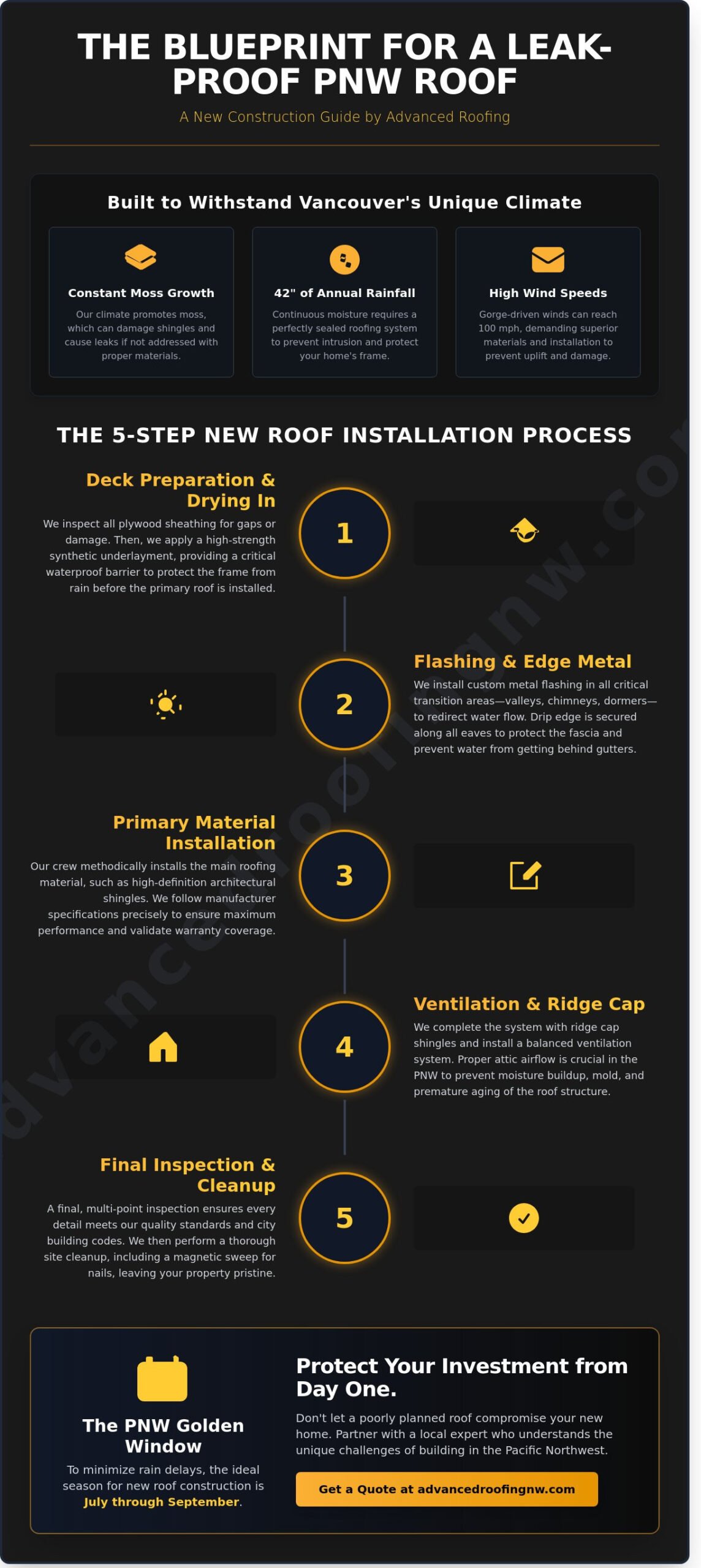
Moving from a bare wooden skeleton to a weather-tight home requires precise timing and coordination. We work closely with general contractors to ensure our roofing crew arrives the moment the framing is finalized. This synchronization prevents the interior structure from absorbing excessive moisture. In Clark County, where humidity levels often exceed 80% during the rainy season, the “Dry-In” phase is the most critical milestone for any new roof construction project. Our goal is to transform your exposed frame into a protected sanctuary as quickly as possible.
Quality control isn’t a final step; it’s a constant process. We implement specific checkpoints during the installation of the primary roofing material to ensure every shingle or panel meets our standards. This methodical approach provides the long-term value and peace of mind our Northwest neighbors expect from a professional build.
Step 1: Deck Preparation and Drying In
Before any material is laid, our team inspects every inch of the plywood sheathing. We look for gaps larger than 1/8 inch or any signs of delamination from recent rain. We then apply high-quality synthetic underlayment, which provides 20 times the tear strength of traditional felt paper. In vulnerable areas like valleys and eaves, we install ice and water shields. This creates a waterproof barrier that meets the Washington State Roofing Safety Code and protects the home even before the shingles are installed.
Step 2: Flashing and Penetration Sealing
Statistics show that 90% of roof leaks occur at flashing points rather than the field of the roof. We prioritize precision around chimneys, vents, and skylights. Our craftsmen use custom-bent metal to ensure the roof system integrates perfectly with your home’s siding and drainage. This level of detail ensures that water is shed away from the structure, protecting your interior framing from the persistent dampness common in Vancouver. Every penetration is sealed with high-grade solar seals that resist UV degradation and thermal expansion.
Step 3: Laying the Primary Roofing Material
Whether we’re installing architectural asphalt shingles or standing seam metal panels, the application process follows strict manufacturer specifications. For new roof construction in high-wind areas like Ridgefield and Camas, we use a 6-nail pattern instead of the standard 4-nail approach. This provides wind resistance up to 130 mph. We maintain strict aesthetic alignment to match your architectural design, ensuring the finished product looks as good as it performs. If you’re currently planning a build, you can reach out for a professional consultation to discuss which materials best suit your home’s profile.
Selecting Materials for the Pacific Northwest Climate
Choosing materials for a new roof construction project in Vancouver requires more than just picking a color. Our local climate, characterized by an average of 42 inches of rain annually, creates a high-humidity environment where standard materials often fail within 12 to 15 years. In shaded neighborhoods like Felida or Cascade Park, moisture lingers on surfaces, creating a breeding ground for moss and algae. This organic growth isn’t just an aesthetic issue; it actively degrades shingle granules and traps water against the roof deck. We recommend selecting shingles with copper-infused granules to neutralize algae spores before they take root and compromise your home’s protection.
The weight of your chosen material also impacts the structural integrity of your build. For a new roof construction, the framing must be designed to support the specific load of the material. Composition shingles typically weigh between 2.3 and 4.5 pounds per square foot. In contrast, metal roofing is significantly lighter, often weighing less than 1.5 pounds per square foot. Researching resilient roofing materials through organizations like the Federal Alliance for Safe Homes (FLASH) helps homeowners understand which products best withstand the high winds and heavy rainfall common near the Columbia River Gorge.
Architectural Shingles vs. Metal Roofing
Architectural shingles remain the standard for residential builds because they offer a balance of durability and affordability. They provide a dimensional look that fits the traditional aesthetic of many Northwest neighborhoods. However, standing seam metal roofing is a growing favorite for modern PNW architecture. It eliminates exposed fasteners, which reduces the risk of leaks over time. While the initial investment for metal is higher, its 40-year to 50-year lifespan often provides a better cost-to-value ratio than shingles, which may require replacement or significant repairs every 20 years in our damp climate. Homeowners who prefer a more traditional wood aesthetic should also explore cedar shake roofing in Vancouver, which offers a timeless rustic look when properly treated and maintained for the Pacific Northwest climate.
While climate-specific needs vary, the core principles of quality residential installation remain consistent across the country; for example, Transition Roofing specializes in providing these types of durable, long-lasting solutions for homeowners looking to secure their property. To see how these standards are applied to high-end custom homes, you can learn more about Diamond Construction and Remodel.
Specialized Solutions for Flat and Low-Slope Roofs
Modern home designs in Vancouver often incorporate flat or low-slope sections that require specialized membranes like TPO (Thermoplastic Polyolefin) or PVC. These materials are heat-welded at the seams to create a single, monolithic waterproof layer. Proper drainage is the most critical factor for these designs. We install “crickets,” which are tapered structures designed to direct water toward drains and scuppers. While steep slopes rely on gravity to shed water, flat roofs demand a continuous, high-grade waterproof seal to prevent the structural rot caused by ponding. This specialized approach ensures your contemporary home stays dry regardless of the season.
Actionable Guidance: Coordinating Your New Roof Project
Successful new roof construction depends on precise timing. You don’t want your roofing crew arriving while the framers are still nailing down the final sheets of plywood. In the Pacific Northwest, where rain can move in with 30 minutes of notice, closing the building envelope quickly is vital for protecting your interior structure. Proper coordination ensures your project stays on schedule and your investment remains dry.
The Handover: From Framing to Roofing
A structure is officially Ready for Roof (RFR) once the sheathing is complete, the fascia boards are installed, and all penetrations like chimneys or skylight curbs are framed. We often see framing errors like inconsistent sheathing gaps; Washington building codes require an 1/8 inch gap between panels to allow for natural expansion. If these gaps are missing, it can cause the shingles to buckle later, delaying the roofing schedule. General contractors should provide a 48 hour notice to the roofing specialist to ensure a seamless transition. This clear communication prevents the wood from soaking up unnecessary moisture during a typical Vancouver drizzle.
Site Preparation and Safety Standards
Safety on a new construction site isn’t just a suggestion; it’s a legal requirement under WAC 296-155. We prioritize a clean workspace to prevent falls and injuries. Before the materials arrive, clear the driveway and the perimeter of the house. A standard boom truck needs at least 15 feet of vertical clearance and a stable, flat surface to load shingles directly onto the roof deck. We use heavy duty tarps and plywood sheets to protect your new landscaping or freshly poured concrete from heavy equipment. This careful planning ensures we maintain the integrity of your property while working efficiently.
Managing debris is another critical factor. A standard 2,500 square foot roof can generate over two tons of waste. We coordinate the placement of a 20 yard debris container to ensure it’s close enough for efficiency but positioned to avoid blocking neighborhood traffic. This organized approach reflects our commitment to being a reliable neighbor in the community.
The Pre-Roofing Checklist:
- Confirm the roof deck is dry and free of sawdust or debris.
- Verify that all drip edge and flashing materials are on-site before the crew arrives.
- Check that the “Boom Truck” has clear access to the eaves without hitting power lines.
- Install permanent fall protection anchors as required by modern safety standards.
- Ensure all neighbors are notified of the construction schedule to maintain community harmony.
If you’re ready to move from the framing stage to a finished, weather-tight home, we’re here to help. Contact us today for a free estimate and let our team provide the protection your new home deserves.
Why Advanced Roofing is Vancouver’s New Construction Partner
Choosing a partner for your new roof construction project involves more than just comparing bids. It requires finding a team that understands the weight of a 30 year investment. Advanced Roofing NW brings over 40 years of local experience to every job site in Vancouver. We’ve been a staple in the Clark County community since 1982, building a reputation on the foundation of stability and protection. We’re family owned and operated, which means we don’t answer to distant shareholders. We answer to you. We treat every new build with the same care and precision we would apply to our own homes.
We maintain full licensing, bonding, and insurance to protect your property and our crew. This level of professional accountability ensures that your build remains on schedule and within budget without unnecessary risks. Our team provides peace of mind through comprehensive warranties and dedicated post-build support. If you have a question or a concern years after the project is finished, you’ll know exactly where to find us. We value long term relationships over quick transactions, making us a reliable anchor for new roof construction throughout the region.
- Local Stability: Over four decades of continuous service in Southwest Washington.
- Full Protection: Completely licensed, bonded, and insured for your peace of mind.
- Accountability: Family-owned values that prioritize integrity and craftsmanship.
- Support: Comprehensive warranties that safeguard your investment for the long haul.
Our Commitment to Northwest Craftsmanship
Vancouver receives an average of 42 inches of rain per year. This constant moisture demands specific installation techniques that contractors from outside the area often overlook. Our local knowledge of Northwest weather patterns allows us to install roofing systems that handle heavy rainfall and high winds with ease. We offer a transparent, no-pressure estimate process for both custom home builders and individual homeowners. You get the facts you need to make an informed decision without any sales gimmicks. Learn more about our residential roofing services to see how we prioritize durability in every shingle we lay.
Get Your Free New Construction Estimate
Starting your project is straightforward and organized. You can submit your architectural blueprints directly to our team for a detailed, accurate quote that accounts for every ridge and valley. Once we review your plans, we’ll schedule an on-site consultation in Clark County to verify logistics and material choices. Our team provides clear timelines and fixed pricing so there are no surprises during the build process. Contact Advanced Roofing today for your free new construction estimate!
Secure Your Investment With Local Expertise
Your home deserves a shield that stands up to the heavy rainfall and wind of the Pacific Northwest. Choosing the right materials and following a detailed 5-step installation plan ensures your property remains protected for the long haul. Successful new roof construction in Vancouver relies on this technical precision and local expertise. Advanced Roofing NW has been family-owned and operated since 1980, bringing over 40 years of local experience to every job site in Clark County. We’re fully licensed, bonded, and insured in both Washington and Oregon, so you can trust our team to handle the heavy lifting with integrity. We prioritize your peace of mind by delivering craftsmanship that lasts. Our team understands the specific building codes and weather patterns that define our region. We’re ready to help you build a roof that protects your family and your investment for decades to come.
Get a Free Estimate for Your New Construction Project
We look forward to working with you to make your project a success.
Frequently Asked Questions
How long does it take to install a roof on a new construction home?
Most new roof construction projects for a standard 2,500 square foot home take between 2 and 5 days to complete. This timeline depends on the complexity of the roof pitch and the specific materials chosen. We coordinate closely with other trades to ensure the dry-in phase happens quickly. This protects the interior framing from the 42 inches of average annual rainfall we see here in Vancouver.
Can you install a new roof in the rain in Vancouver, WA?
We don’t install roofing materials during active heavy rainfall or high winds to protect your home’s structural integrity. While light mist is common in the Northwest, heavy rain prevents the shingles from sealing correctly and creates safety hazards for our crew. We monitor local weather reports from the National Weather Service daily. Our team uses high-quality synthetic underlayment to keep the decking dry until a clear weather window opens.
What is the best roofing material for the Pacific Northwest weather?
Architectural asphalt shingles are the most reliable choice for our damp climate because they handle 110 mile per hour wind gusts effectively. You should look for shingles with a Class A fire rating and built-in copper or zinc granules to prevent moss growth. These materials are designed specifically to withstand the 160 days of precipitation Vancouver experiences annually. They provide a durable barrier that keeps your family safe and dry for decades. Some homeowners also consider cedar shake roofing for its natural beauty and performance in the Pacific Northwest, provided it is properly graded and treated to resist the region’s persistent moisture.
Do I need a separate permit for the roof on a new construction project?
You typically don’t need a separate roofing permit because the City of Vancouver includes the roof under your primary residential building permit. The International Residential Code requires specific inspections during the framing and final stages. We verify that all venting and flashing meet local 2021 Washington State Energy Code requirements. This ensures your new roof construction passes inspection the first time without causing delays for your general contractor.
What is the difference between a roof replacement and new construction roofing?
New construction roofing begins with a fresh plywood deck on a brand-new frame, whereas a replacement involves stripping away old, failing materials first. In a new build, we have the advantage of perfect deck conditions without hidden rot or previous repair issues. This allows us to install a precision-engineered system from the start. We focus on integrating the flashing with the new siding and house wrap to create a seamless moisture barrier.
How do I coordinate the roofing phase with my general contractor?
We schedule our crew to arrive immediately after your framing team completes the roof deck and fascia boards. This timing is critical because it allows the dry-in to occur before the plumbers and electricians begin their interior work. We maintain a clear line of communication with your site supervisor to avoid scheduling conflicts. Our goal is to provide a smooth transition that keeps your entire project on its planned 6-month or 12-month construction timeline.
Should I install gutters at the same time as the new roof?
You should install new gutters immediately after the roofing material is laid to prevent water from damaging your new foundation or siding. Vancouver receives 4 inches of rain or more during peak winter months like December. Coordinating these two services ensures the drip edge and gutter brackets work together perfectly. This integrated approach protects your landscaping and prevents basement moisture issues before they ever start.
What kind of warranty comes with a new construction roof?
Most high-quality asphalt shingles come with a 30-year or limited lifetime manufacturer warranty against material defects. We supplement this with our own 10-year workmanship warranty to cover the installation itself. This dual layer of protection gives you peace of mind knowing your investment is secure. We provide all the necessary documentation once the final inspection is complete so you can keep it with your home’s permanent records.