Your roofing contract isn’t just a receipt; it’s a legal shield designed to protect your family and your biggest investment from the relentless Pacific Northwest rain. We understand the anxiety that comes with technical jargon and the fear of hidden costs appearing once the teardown begins. Knowing the specific questions to ask before signing a roofing contract is the most effective way to ensure your project stays on track and your contractor is truly legitimate.
Since 1997, Advanced Roofing has served Vancouver, WA and surrounding Southwest Washington communities with over 20 years of experience. We believe in building trust through transparency, starting with a free on-site estimate. This article provides an expert-vetted checklist to help you verify local licensing, lock in pricing confidence, and understand exactly what goes into a high-quality roof. You will learn how to spot red flags early so you can sign your agreement with total peace of mind.
Key Takeaways
- Verify your contractor’s credentials by learning how to check for valid licensing and the newly increased bond requirements in both Washington and Oregon.
- Use our expert-vetted questions to ask before signing a roofing contract to ensure the scope of work includes essential details like attic ventilation and landscape protection.
- Protect your home from future leaks by clarifying the distinction between manufacturer material warranties and local workmanship guarantees.
- Gain confidence in your final pricing by understanding standard payment schedules and the legal “cooling-off” periods that protect homeowners from high-pressure sales.
Essential Legal and Local Credentials for PNW Roofers
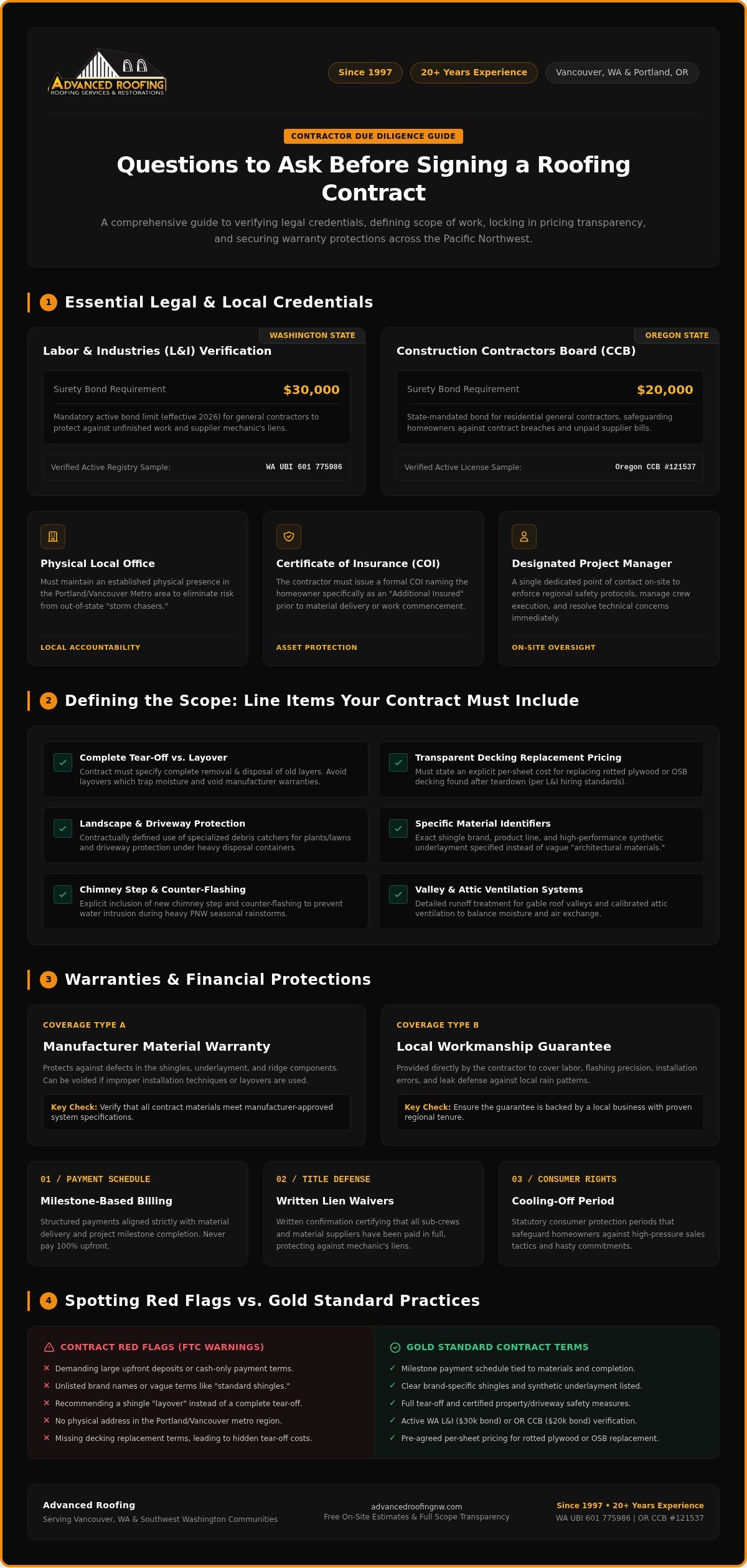
Your roofer’s legitimacy starts with their physical presence and legal paperwork. Before any shingles are moved, verify your contractor maintains a physical office within the Portland/Vancouver Metro area. This ensures they aren’t a “storm chaser” from out of state. One of the most vital questions to ask before signing a roofing contract is whether they can provide a Certificate of Insurance (COI) that names you as an additional insured. This specific document protects your assets if an accident occurs on your property.
Ask who will be your designated project manager. You need a single point of contact on-site to handle technical questions and ensure the crew follows regional safety protocols. Since 1997, Advanced Roofing has prioritized this level of accountability for every project in Vancouver, WA and Portland, OR. We believe clear communication is just as important as the craftsmanship itself.
Navigating Local Licensing Requirements
The Pacific Northwest has strict regulatory standards that vary by state. In Washington, contractors must register with Labor & Industries (L&I). As of 2026, general contractors must carry a $30,000 surety bond. Oregon requires a Construction Contractors Board (CCB) license, which mandates a $20,000 bond for residential general contractors. These bonds are essential because they protect you from unfinished work or unpaid supplier bills that could lead to mechanic’s liens against your title.
Always verify active status for licenses like WA UBI 601 775986 or Oregon CCB #121537. For a deeper look at regional standards and safety tips, read our comprehensive guide on roof replacement vancouver wa. With over 20 years of experience, our team understands that following these local codes is the only way to guarantee a safe, high-quality installation.
Defining the Scope: What Should Be in Your Roofing Contract?
A clear scope of work prevents “surprise” costs that can derail your budget. One of the top questions to ask before signing a roofing contract is whether the bid includes the complete removal and disposal of all old roofing layers. Some contractors might suggest a “layover,” but this traps moisture and voids many manufacturer warranties. You also need to know how the crew will protect your property. Ask if they use specialized debris catchers to save your landscaping and how they prevent driveway damage from heavy equipment or waste containers.
Transparency regarding structural integrity is vital. Ensure your contract includes a specific per-sheet price for replacing rotted plywood or OSB decking discovered after the teardown. This practice aligns with the Washington State Department of Labor & Industries hiring guidelines for establishing clear expectations. Don’t accept a vague list of “materials”; demand the specific shingle brand and synthetic underlayment type to ensure you’re getting the long-term protection your home deserves.
Addressing PNW-Specific Roofing Challenges
In our damp climate, flashing is your first line of defense. Your contract should explicitly mention new step and counter-flashing for chimneys to prevent leaks during heavy seasonal rain. Valley treatments are another priority, especially for gable roof designs where water runoff is heavily concentrated. Using a high-performance synthetic underlayment is essential for Northwest homes to manage moisture effectively. If you’re feeling overwhelmed by technical details, our team can provide a free on-site estimate to walk you through every line item of your project. These questions to ask before signing a roofing contract help you verify that every valley and vent is properly protected.
Understanding Warranties and Financial Protections
Financial clarity is the foundation of a stress-free project. You shouldn’t feel pressured to pay the full amount upfront. Instead, look for a milestone-based payment schedule that aligns with material delivery and project completion. One of the essential questions to ask before signing a roofing contract is whether the company provides a written lien waiver. This document confirms that all subcontractors and material suppliers have been paid, protecting you from future claims against your home. Following Federal Trade Commission contractor hiring advice helps you spot red flags like requests for cash-only payments or unusually large deposits.
Expect the unexpected during the teardown phase. In our wet climate, moisture often hides beneath old shingles, leading to rotted decking or structural issues. Your contract must define exactly how these change orders are handled before the work begins. We recommend a pre-negotiated rate for plywood replacement to avoid price spikes in the middle of the job. Clear terms ensure your final bill matches your expectations and your home remains secure.
Securing Your Investment Long-Term
Warranties are often misunderstood by homeowners. A manufacturer’s warranty only covers product defects, while a workmanship warranty covers the actual installation. If a shingle fails because it was nailed incorrectly, the manufacturer won’t cover the repair. This is why choosing a team with over 20 years of experience is vital. Since 1997, Advanced Roofing has stood behind every nail we drive. For business owners, choosing commercial roofing contractors portland requires even more scrutiny regarding long-term coverage. These questions to ask before signing a roofing contract ensure your investment is protected by both the material maker and the local experts who installed it.
Secure Your Home with Confidence
Protecting your property starts long before the first shingle is laid. By mastering the right questions to ask before signing a roofing contract, you ensure your contractor is legally compliant and your home is protected by a precise scope of work. Remember to verify active licenses in both Washington and Oregon, demand a clear plan for structural repairs, and confirm that your workmanship warranty is backed by a reputable local company. Since 1997, Advanced Roofing has operated as a family owned business with over 20 years of experience serving the Portland/Vancouver Metro area. We are fully licensed, bonded, and insured to provide the peace of mind you deserve. Take the first step toward a durable, high quality roof today. Request Your Free On-Site Estimate from Advanced Roofing Today and let our experts help you safeguard your investment for years to come.
Frequently Asked Questions
Can I cancel a roofing contract after I have signed it?
Yes, you generally have a legal right to cancel a home improvement contract within three business days if it was signed at your residence. This “cooling-off” period is a standard consumer protection under federal and state law. We recommend reviewing the specific rescission clause in your agreement to understand the process. Our team values your peace of mind and encourages a no-pressure environment during every free on-site estimate.
What happens if it rains during my roof installation in the PNW?
Experienced crews in the Portland and Vancouver area manage rain by only removing sections of the roof that can be dried-in quickly. If unexpected weather arrives, we use high-grade waterproof tarps to seal the structure immediately. This methodical process prevents moisture from reaching your attic or decking. Protecting your home from the damp Northwest climate has been our priority since 1997.
Should I pay for my new roof in full before the work starts?
You should never pay the total cost of a roofing project before the work starts. A standard practice involves a modest deposit followed by milestone payments tied to material delivery and installation progress. Final payment is withheld until the job is complete and you have verified the quality. This is one of the top questions to ask before signing a roofing contract to ensure financial accountability.
How do I know if the roofing materials listed in the contract are high quality?
High-quality contracts list specific manufacturer names and product series rather than using vague descriptions like “architectural shingles.” Look for certified brands such as Owens Corning, PABCO, or Malarkey. You can also verify quality by checking if the contractor holds factory certifications. With over 20 years of experience, we only install materials proven to withstand the unique wind and rain challenges of the Pacific Northwest.